
Last updated November 23, 2026
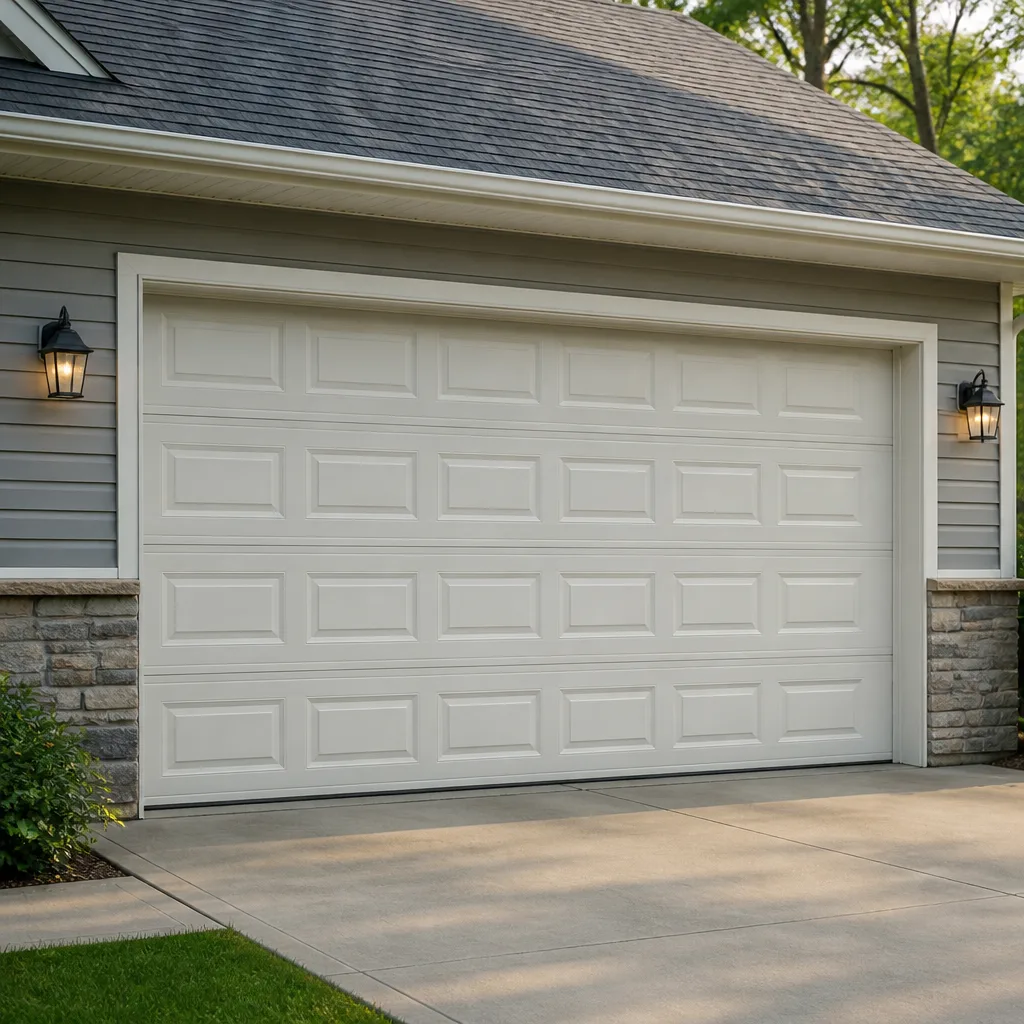 Raised-panel steel
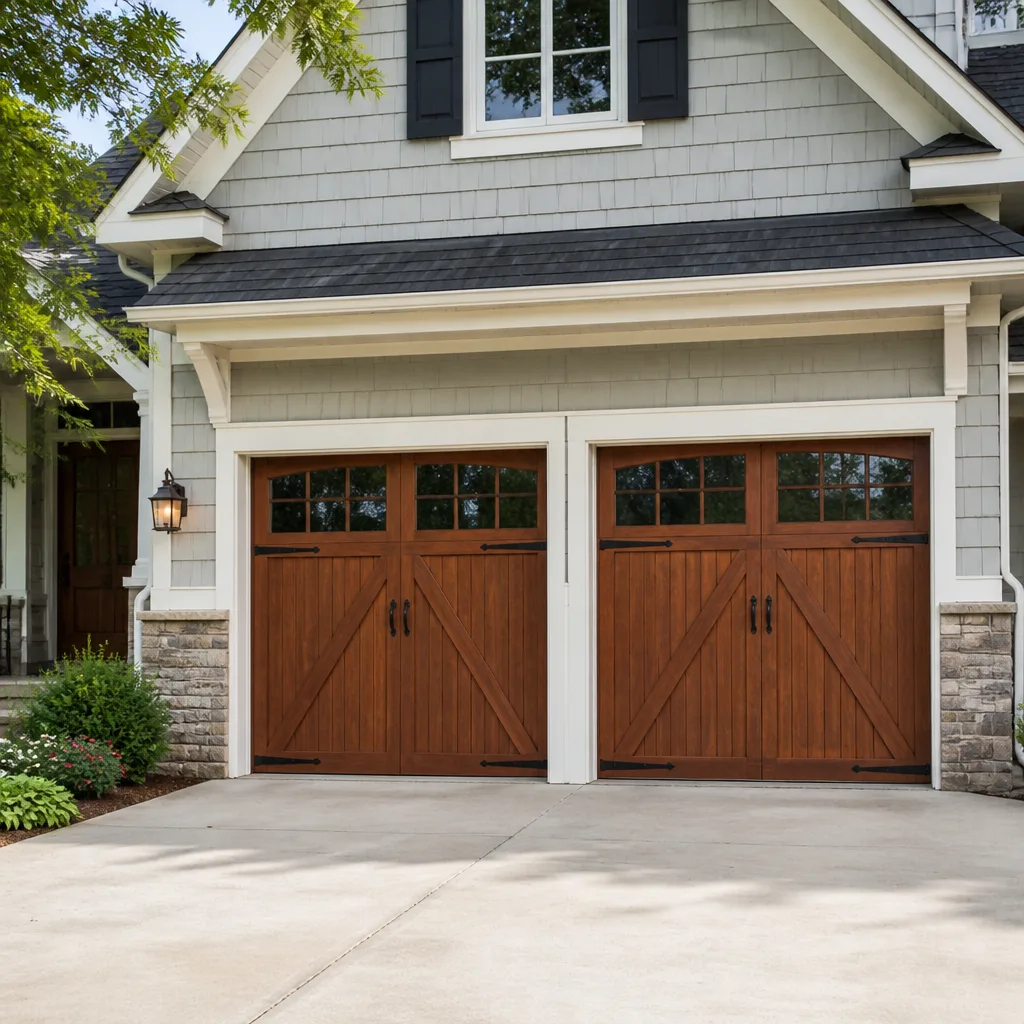 Carriage house
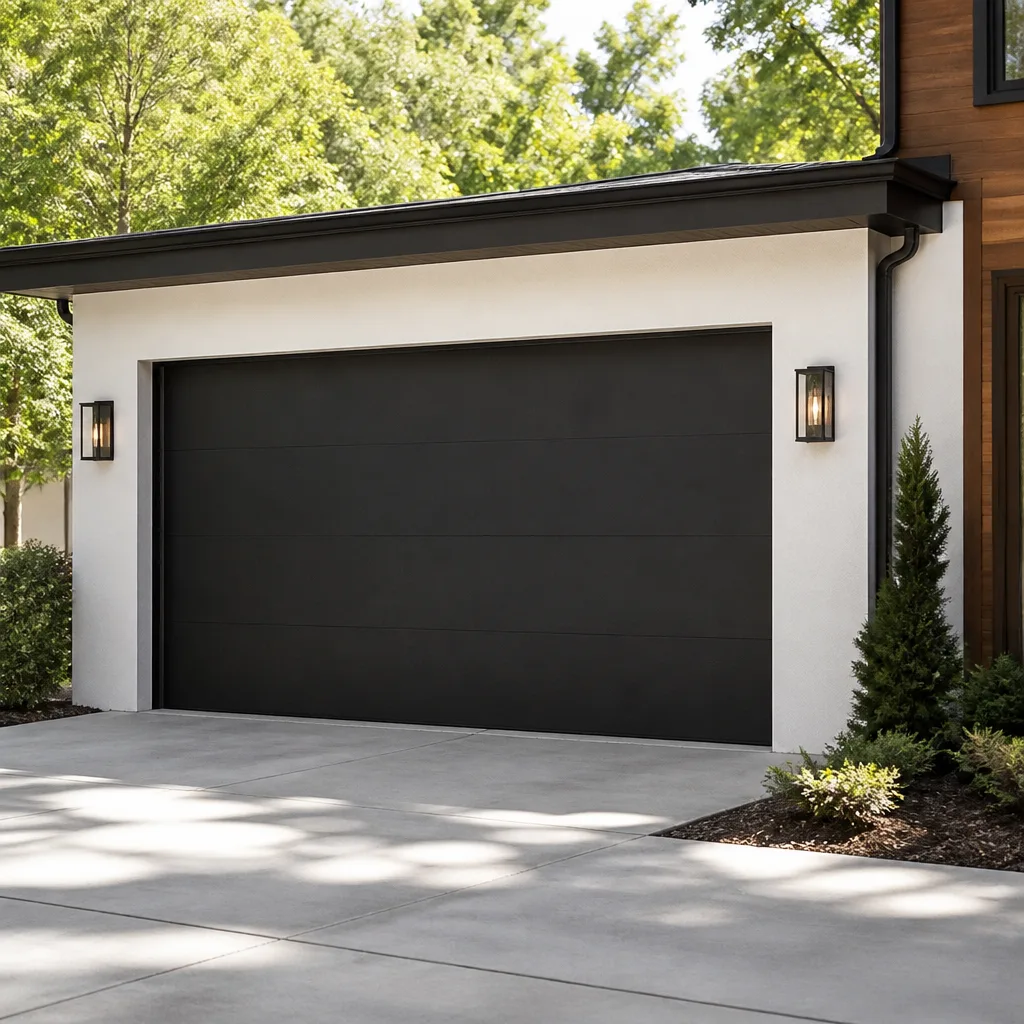 Modern flush
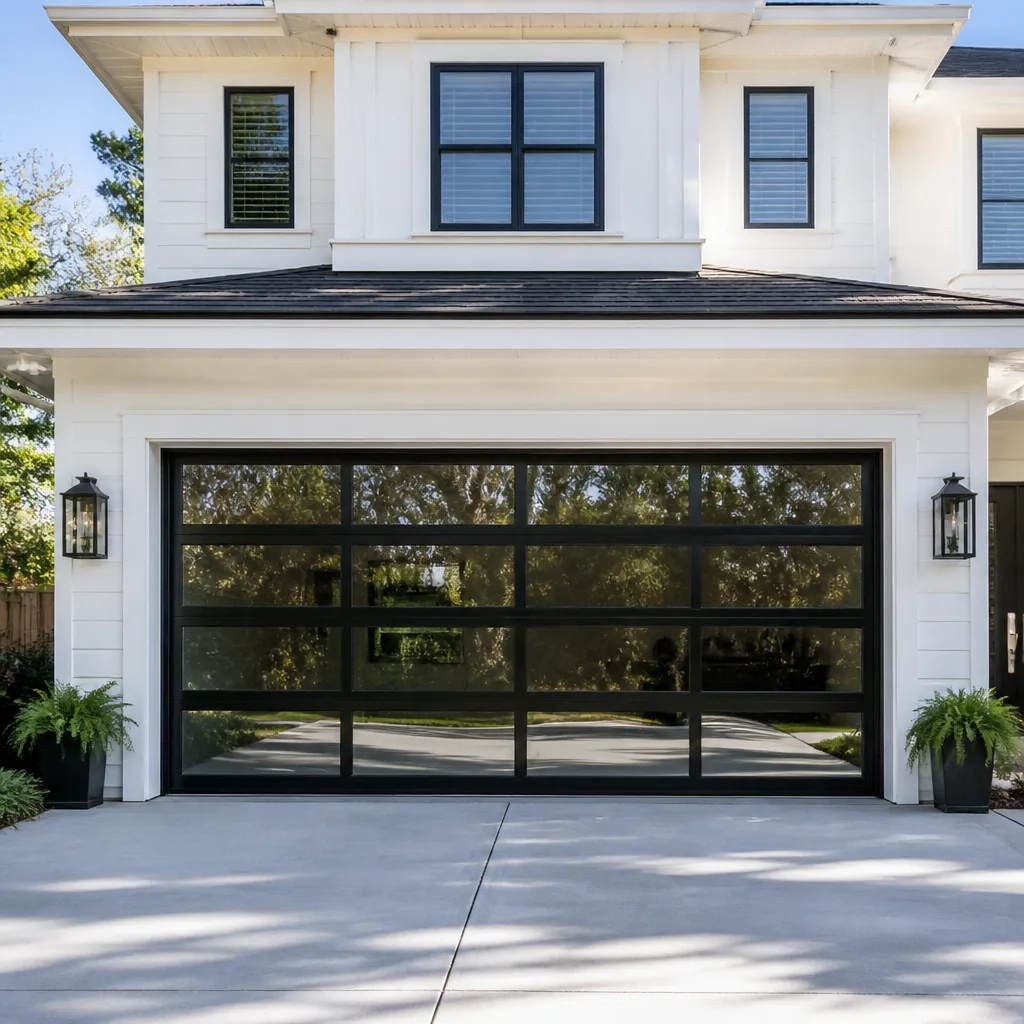 Full-view glass
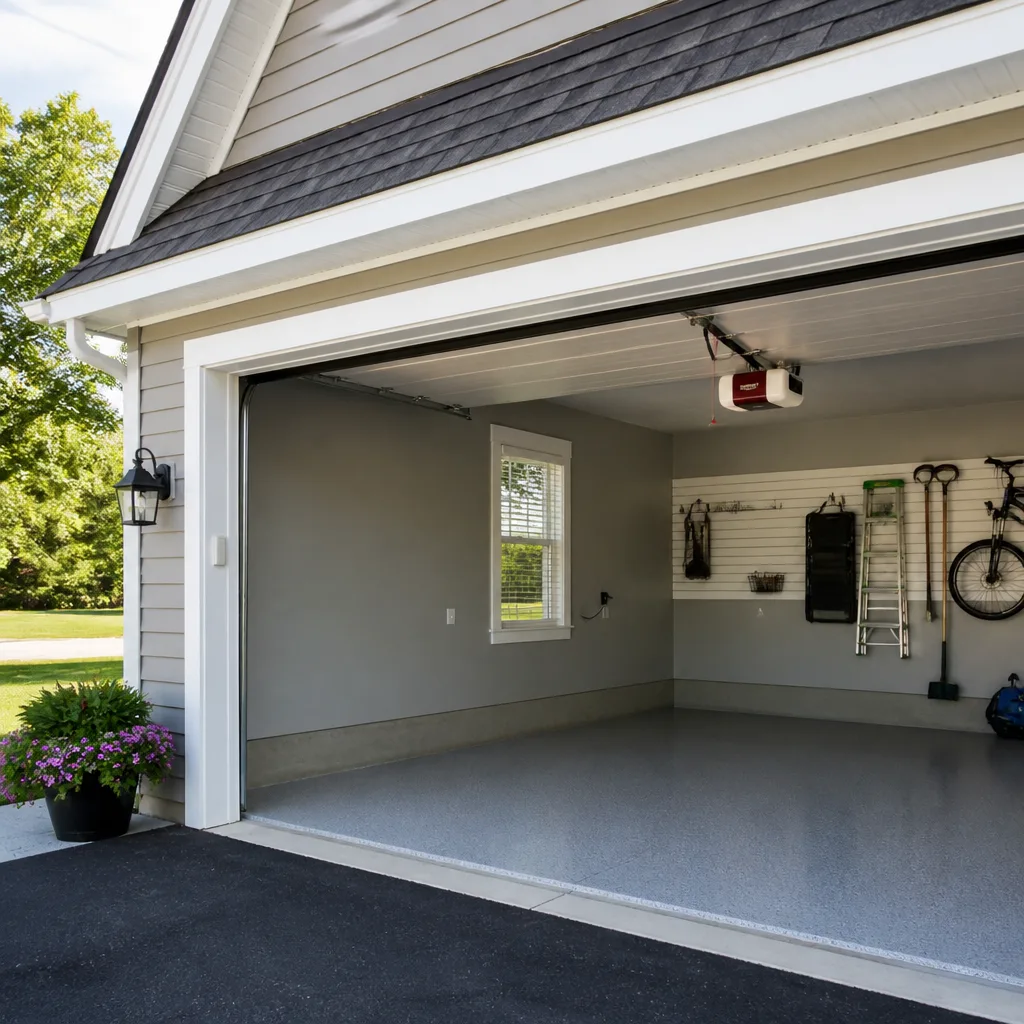 LiftMaster openers
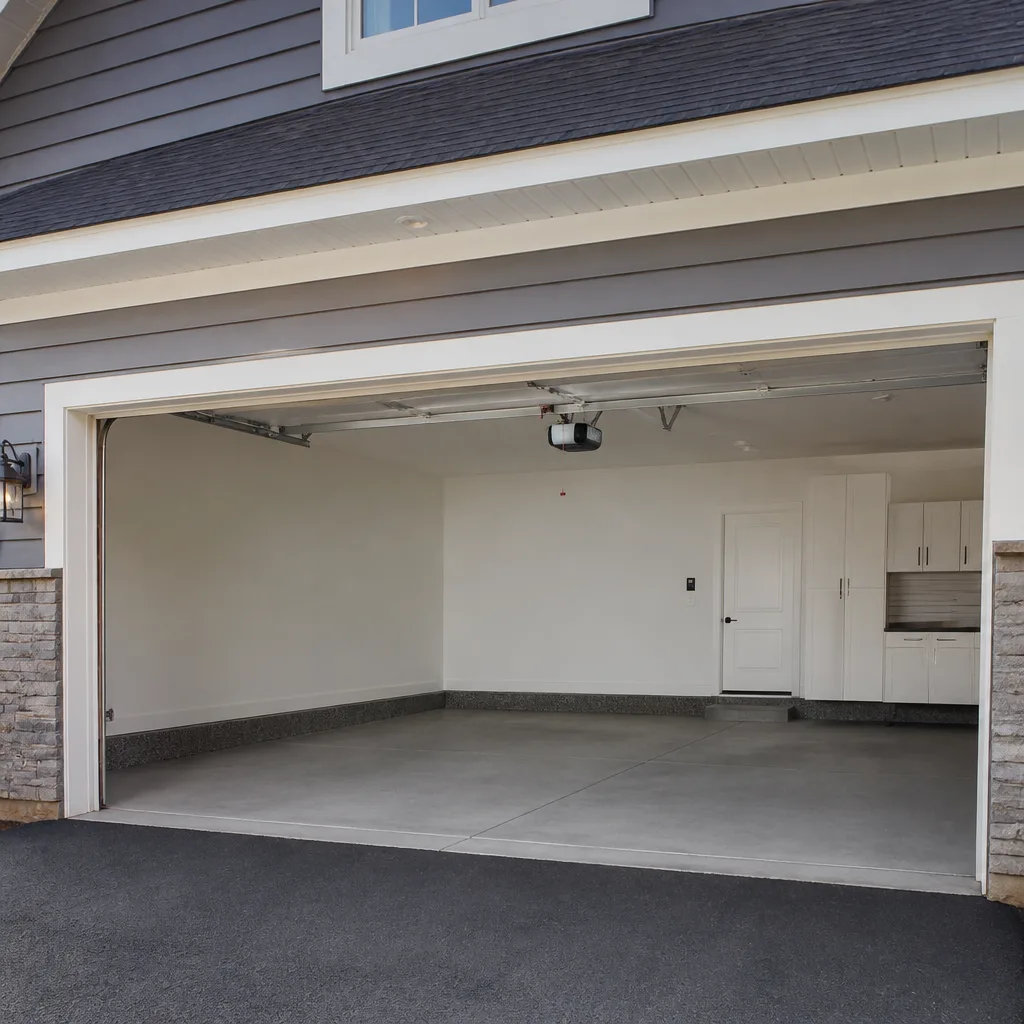 Chamberlain openers
Full 25-point door and opener safety check with every visit - springs, cables, rollers, tracks, and your LiftMaster or Chamberlain opener included
You get a price before we start. It does not change when the pro arrives.
Get your free estimateGarage Door Repair Troubleshooting in Frederick: Common Problems and How to Fix Them
The door that “just stopped working” overnight almost never broke overnight. There’s a mechanical chain of events behind every failure, and by the time the door quits, one specific link has already been slipping for weeks. Maybe it was the cable fraying a strand at a time, or a spring that had lost tension through a long cold stretch. The symptom is what you notice. The root cause is what actually needs attention. This guide maps the complaints we hear across Frederick to their real mechanical causes, so you can tell whether a screwdriver is the right next move or whether it’s time to call in a specialist. You’ll learn the five failure categories, the freeze-thaw patterns that are specific to this area, and exactly what details to gather before you pick up the phone.
Quick Answer
Most garage door problems in Frederick fall into five mechanical categories: balance and spring issues, travel and limit problems, safety-reverse faults, track and roller damage, and opener power or logic faults. Noisy, slow, or stuck doors usually point to worn rollers or a failing spring, while doors that reverse unexpectedly or won’t close are almost always photo-eye or limit-switch problems. You can safely adjust limit screws and realign photo-eyes yourself. Anything involving torsion springs, cables, or cable drums needs a trained technician because those parts hold dangerous tension.
Styles & brands we work with
- Raised-panel steel
- Carriage house
- Modern flush
- Full-view glass
- LiftMaster openers
- Chamberlain openers
Table of Contents
- The Five Mechanical Categories Behind Every Garage Door Problem
- Symptom-to-Cause Diagnostic Tree
- How Frederick’s Freeze-Thaw Cycle Creates Specific Failures
- DIY vs. Professional: Where the Line Actually Sits
- Opener Brand Quirks: Blink Codes That Mean Different Things
- How to Document the Problem Before You Call
- What Garage Door Repairs Typically Cost in Frederick
- Safety: What Never to Touch
The Five Mechanical Categories Behind Every Garage Door Problem
Every garage door failure traces back to one of five mechanical systems. Knowing which one you’re dealing with narrows the diagnosis before anyone touches the door. In our experience, roughly three out of four service calls come down to the balance system or the travel settings. The rest split between the safety reverse system, the track and roller assembly, and the opener’s own electronics. Here’s how each category behaves when it starts to fail.
- Balance and springs: The torsion spring or springs counterbalance the door’s weight. When one weakens or snaps, the door becomes dangerously heavy, opens unevenly, or won’t lift at all. You’ll often hear a loud bang and find the door stuck.
- Travel and limits: The opener’s limit screws tell the motor how far to push the door up and down. When they drift, the door stops short, reverses early, or hits the floor and bounces back up.
- Safety reverse: Photo-eyes and the pressure sensor stop the door from closing on a person or object. Misaligned lenses, spider webs, or a misread pressure threshold will cause the door to reverse the moment it starts down.
- Track and rollers: Bent tracks, worn nylon rollers, and loose hinges make the door noisy, slow, or jumpy as it travels. A track knocked out of alignment by a car bumper is one of the most common post-impact calls.
- Opener power and logic: Dead remotes, tripped wall switches, blown logic boards, or a gear and sprocket assembly that’s worn smooth. This category is often electrical or control-related rather than mechanical.
The value of running through these five categories is that it tells you which part of the system to look at first. A door that works from the wall switch but not from the remote isn’t a balance problem. A door that opens fine but reverses partway down isn’t an opener power issue. Categorize the symptom first, and the rest of the troubleshooting gets much faster.
Symptom-to-Cause Diagnostic Tree
The fastest way to troubleshoot a garage door is to start with exactly what the door is doing wrong and work backward. This numbered sequence walks through the most common symptoms we encounter in Frederick, in the order they should be checked. Each step points to the most probable cause and the safest first action.
- Door is noisy (grinding, squealing, rattling): Usually dry hinges, worn rollers, or a loose track. First action: inspect the rollers for flat spots and check that the hinges are tight. Lubrication on hinges and rollers is safe; the spring assembly is not a lubrication target.
- Door is slow or sluggish: Often a weakening spring that’s making the opener work harder, or a binding track. First action: disconnect the opener using the manual release and try lifting the door by hand. If it’s heavy or hard to lift, the balance system is the problem, not the motor.
- Door won’t move at all: Could be a tripped safety sensor, a dead remote battery, a tripped circuit, or a snapped spring. First action: check the wall switch, then the breaker, then the manual release. If the door is heavy when released, stop and call a technician.
- Door reverses unexpectedly: Photo-eye misalignment, an obstruction in the path, or a limit switch that’s drifted. First action: clean both photo-eyes and check that the small indicator lights on each one are steady, not flickering.
- Door opens but won’t close: Almost always the safety reverse system. First action: check for anything in the door’s path, clean the lenses, and confirm the wall switch isn’t locked out. This is the single most common “won’t close” call.
- Door closes then bounces back up: The down limit is set too low, or the pressure sensitivity is set too high. This is adjustable at the opener head and is a safe DIY fix on most models.
- Door is crooked or off-track: A bent track, a broken cable, or a roller popped out of the rail. Stop using the door. Running an off-track door can pull it off the header entirely, which turns a repair into a replacement.
Running through this list in order takes about ten minutes and will tell you which part of the system is worth a closer look. It also gives you a clear description to give a technician when you call. For anything that points to a broken cable, snapped spring, or off-track door, stop the diagnosis and call for garage door repair rather than running the door to see what happens next.
How Frederick’s Freeze-Thaw Cycle Creates Specific Failures
Frederick sits in a climate with genuinely cold winters and humid summers, and that combination produces failure patterns that a troubleshooting guide written for a warm-weather market will completely miss. The freeze-thaw cycle is the biggest factor. Water gets into a crack or a seam, freezes overnight, expands, and thaws the next day. Repeat that over a winter and metal parts fatigue in ways they never would in a mild climate. Here are the specific problems we see most in Frederick as a result of that cycle.
- Spring fatigue in cold snaps: Torsion springs lose tension faster in repeated cold cycling. A spring that was carrying the door fine in October may snap the first week temperatures drop hard. It’s not a coincidence that spring calls cluster in the coldest stretches of the Frederick winter.
- Track contraction and misalignment: Steel tracks expand and contract with temperature. Bolts that were snug in the summer can loosen through winter contraction, and the door starts tracking slightly off-center by spring.
- Frozen door seals and thresholds: The bottom weather seal can freeze to the floor or the threshold, and the opener pulls the door against the ice. That stalls the motor or strips the opener’s gear assembly over time.
- Humid summer swelling: Wooden door panels and wooden frames swell in Frederick’s humid summers, which can bind a door that travels fine the rest of the year. Steel doors don’t swell, but their seams collect moisture and rust in the corners.
- Photo-eye condensation: On the coldest mornings, condensation on the photo-eye lenses causes false obstructions and doors that won’t close. Cleaning the lenses fixes it, but the underlying issue is real and it recurs.
If you live in a Frederick neighborhood with older homes, like the streets around Baker Park or the detached garages common in the historic district, the freeze-thaw stress is even more pronounced because the doors and hardware are older and have less tolerance for expansion. A door that ran quietly for years can suddenly start binding through a cold snap and settle back down by March. That doesn’t mean it fixed itself. It means a worn part is now one cold cycle away from failing outright.
DIY vs. Professional: Where the Line Actually Sits
There’s a clear, defensible line between what a homeowner can adjust safely and what actually requires a trained technician. It’s not about skill or confidence. It’s about stored energy. If a part holds energy under tension, a mistake releases that energy suddenly, and that’s how garage door injuries happen. Here’s the breakdown of what’s on each side of the line.
Safe to check or adjust yourself
- Photo-eye alignment: Cleaning the lenses and nudging them back into alignment is safe. There are two small screws that hold each lens; loosening them, aiming the lens at the opposite unit, and retightening is a five-minute job.
- Limit screws: The up and down limit screws on the opener head adjust how far the door travels. Turn them in small increments, test, and repeat. This is a safe adjustment on most openers.
- Force sensitivity: The force adjustment on the opener controls how hard the door pushes before reversing. Usually a small dial under a cover on the opener head. Adjust in small steps and test with a light object in the path.
- Remote batteries and reprogramming: Dead remotes are one of the most common calls, and it’s almost always a battery or a re-pairing issue. New batteries are cheap, and most openers have a pairing button on the motor head.
- Manual release: Knowing where the red emergency release handle is and how to use it is the single most useful piece of garage door knowledge you can have. On most openers, pull the handle down and the door disconnects from the motor.
Requires a trained technician
- Torsion springs: These springs hold enough stored energy to cause serious injury. Adjusting or replacing them without the right winding bars, training, and knowledge of the spring’s cycle count is genuinely dangerous. Leave this to a professional. This is the core of what our garage door spring repair work involves.
- Extension springs: Same story. An extension spring under tension can snap and fly with enough force to injure anyone nearby if the safety cables aren’t installed correctly.
- Cables and cable drums: The cables carry the door’s full weight alongside the springs, and the drums wind the cable under tension. A slipped cable can unspool the door instantly.
- Track realignment after impact: A bent track can be straightened in some cases, but only by someone who knows how far it can be corrected before it’s structurally compromised. Straightening by hand often makes it worse.
- Opener logic board and gear assembly: Once the opener’s electronics or internal gear are failing, the repair is a technician job, not a parts swap. Diagnosing which component failed requires a meter and experience with the specific brand.
The simplest rule: if a part is under tension from the spring system or the door’s weight, don’t touch it. Everything else is fair game. We work on virtually every major brand, but the type of brand doesn’t change where that line is.
Opener Brand Quirks: Blink Codes That Mean Different Things
When an opener gives you a blinking light, it’s trying to tell you exactly what’s wrong. The problem is that the same pattern means different things on different brands, and two brands owned by the same parent company don’t share a codebook. This is one of the most common sources of confusion we run into. Chamberlain and LiftMaster are both owned by the same parent company, but their blink codes are not identical. A pattern that means “obstruction” on one can mean “safety sensor failure” on the other. Treating the codes as universal is how a simple problem gets misdiagnosed.
Here’s how the most common brand families differ in our experience:
- LiftMaster: Blink patterns on the opener head or the wall control usually map to a specific fault. Multiple quick blinks followed by a pause typically point to a safety sensor issue, which is the most common LiftMaster fault we see. LiftMaster and Chamberlain share heritage, but the specific pattern counts and what each number stands for don’t match across the two.
- Chamberlain: Same family, different codebook. Where a LiftMaster pattern might point to a sensor, the Chamberlain equivalent often indicates a travel limit or force issue. If you’re troubleshooting a Chamberlain door, don’t assume the LiftMaster chart applies.
- Craftsman: Craftsman openers use their own diagnostic conventions, and older models occasionally flash patterns that don’t map to modern charts at all. If you’re working with a Craftsman opener and the pattern you’re seeing doesn’t match any common chart, that’s usually a sign of an older logic board behaving to an earlier standard.
- Raynor: Raynor openers, less common but still out there in Frederick, tend to be quieter about their faults. They don’t always flash a distinct pattern and may just stop responding. That’s a sign to test the door’s balance by hand and check the wall switch before assuming the opener is dead.
The practical upshot is that you should never Google a blink code without also confirming the brand and model. The same signal on a Wayne Dalton or a Craftsman means something different than it does on a LiftMaster. When the code is ambiguous, that’s exactly when garage door opener repair aimed at your specific unit makes the difference.
How to Document the Problem Before You Call
The single biggest determinant of whether a phone estimate is accurate is how well the homeowner describes the failure before the technician arrives. A vague “the door won’t work” gets a broad guess. A specific description gets a precise answer and lets the technician arrive with the right parts. Here’s the information that actually helps.
- The exact symptom: Not just “broken.” Does it open but not close? Does it close and bounce? Does it not move at all? Is it making a specific noise? These are different failures with different repair paths.
- When it started: After a cold snap? After a power outage? After someone backed into it? The timing narrows the cause dramatically. Spring failures cluster after cold snaps, and control failures cluster after power events.
- The brand and model: Check the opener head and the door panel. If you can read the brand, that tells the technician which codebook to use. LiftMaster, Chamberlain, Wayne Dalton, and Craftsman all behave slightly differently.
- What the door does by hand: Disconnect the manual release and try lifting the door yourself. Does it lift easily or feel heavy? Does it bind? This single test tells a technician whether the problem is in the balance system or the opener, which is the most important split in the whole diagnosis.
- Any blinking lights or codes: Note how many blinks, whether they’re on the opener head or the wall control, and the pattern of the pauses. This eliminates guesswork.
- A photo of the door and the opener head: A photo from the front of the door plus one of the opener unit and the two photo-eyes saves a lot of back-and-forth. Most homeowners can take these in two minutes.
- The age of the system, if you know it: An opener past its expected service life behaves differently than one that’s a few years old. This is about the equipment, not the company. Doors and openers have a lifespan, and knowing roughly where yours is helps the technician decide whether repair or replacement makes more sense.
Have this list ready when you call. It’s the difference between a rough range and a real estimate. Our team at Frederick Garage Door Repair Pros uses that information to give accurate phone estimates and arrive with the right parts, which is what keeps a repair from turning into a second visit.
What Garage Door Repairs Typically Cost in Frederick
Here are the typical estimated ranges for the most common garage door repairs in the Frederick area. These are estimates, not final prices. The written estimate you receive before any work starts sets the final price, and you approve it before anyone touches the door.
| Repair | Typical estimate |
|---|---|
| Single torsion spring replacement | $180-$340 per spring |
| Matched spring pair (usually replaced together) | About twice the single-spring range |
| Photo-eye realignment or sensor replacement | $90-$180 |
| Roller replacement (set) | $150-$300 |
| Track realignment or repair | $150-$350 |
| Opener logic board or gear repair | $150-$350 |
| Bottom weather seal replacement | $100-$200 |
A few notes on those ranges. The spring price is for one spring. Because torsion springs are usually replaced in matched pairs, the pair costs roughly twice the single-spring figure. That’s not a markup. A pair replaced together keeps the door balanced, and replacing one spring while leaving the other in place tends to lead to a second visit. Repair costs depend on the brand and the specific part; Wayne Dalton, LiftMaster, Raynor, and Craftsman openers all have different parts profiles.
For a door that’s off-track, has a snapped cable, or needs a full spring-and-cable rebuild, the range is higher because more components are involved. For a full replacement rather than a repair, the estimate is much higher and depends on the door material and size. The written estimate is the answer for your specific door. No surprise invoice after the fact. The number you approve before the work starts is the number that governs the bill. Call (855) 658-4191 for a free estimate. We answer 24/7, with fast dispatch from 7am to 7pm, Sunday through Friday.
Safety: What Never to Touch
Garage door springs, cables, and cable drums are under extreme tension, and they can release that energy with enough force to cause serious injury. There’s no safe way to handle a torsion spring without the right winding bars, gloves, and knowledge of the spring’s specific tension. This isn’t a caution we add to make the job sound hard. It’s a real hazard that shows up in emergency rooms, and it’s why spring replacement is a specialist job rather than something a homeowner should attempt. If you hear a loud bang from the garage and find the door stuck, stop. Don’t try to lift the door far enough to drive out. Call a technician. The other safety rule is about the door in motion. Keep hands, arms, and children clear of the door’s path, and never run the door while someone is standing under it. The photo-eye is a backup, not a guarantee. And if a door is off-track, bent, or hanging by one side, don’t run it at all. A door that comes off the track under load can drop with more force than the springs. Every service we handle through Frederick Garage Door Repair Pros works on the principle that the unsafe part of the diagnosis is done by someone trained for it. That’s why we focus exclusively on garage doors: our technicians have up to 11 years of experience in this specific system, not in a little bit of everything.
Common Mistakes to Avoid
- Trying to adjust the torsion spring yourself. This is the single most dangerous mistake we see. The spring is under extreme tension and requires exactly the right tool and training to handle. A DIY attempt can release the spring suddenly and cause serious injury.
- Ignoring a door that’s tracking crooked. A door that’s a little off-center after a cold snap doesn’t fix itself. Running it in that state pulls the track further out of alignment and can turn a simple realignment into a full track replacement.
- Overtightening the limit screws. When the door stops short, homeowners often crank the limit screw in big jumps looking for the right spot. That’s how the door ends up slamming into the floor. Adjust in small increments and test each one.
- Replacing one spring when both should go. A matched pair should be replaced together. If one spring has snapped, the other is the same age and the same stress. Replacing one and waiting for the other usually means a second call.
- Assuming a blinking light means the same thing regardless of brand. As covered above, LiftMaster, Chamberlain, and Craftsman all have different codebooks. Reading the wrong chart is how a simple sensor problem gets misdiagnosed as a logic board failure.
- Running the door with a broken cable. A cable that’s frayed or snapped should mean the door stops moving. Running it puts uneven load on the other components and can pull the door permanently off-track.
- Clean the photo-eyes only once. In a humid Frederick summer, condensation collects on the lenses over and over. If the door keeps reversing, clean the lenses with a dry cloth and check that the indicator lights are steady on both units before assuming a sensor has failed.
See the difference
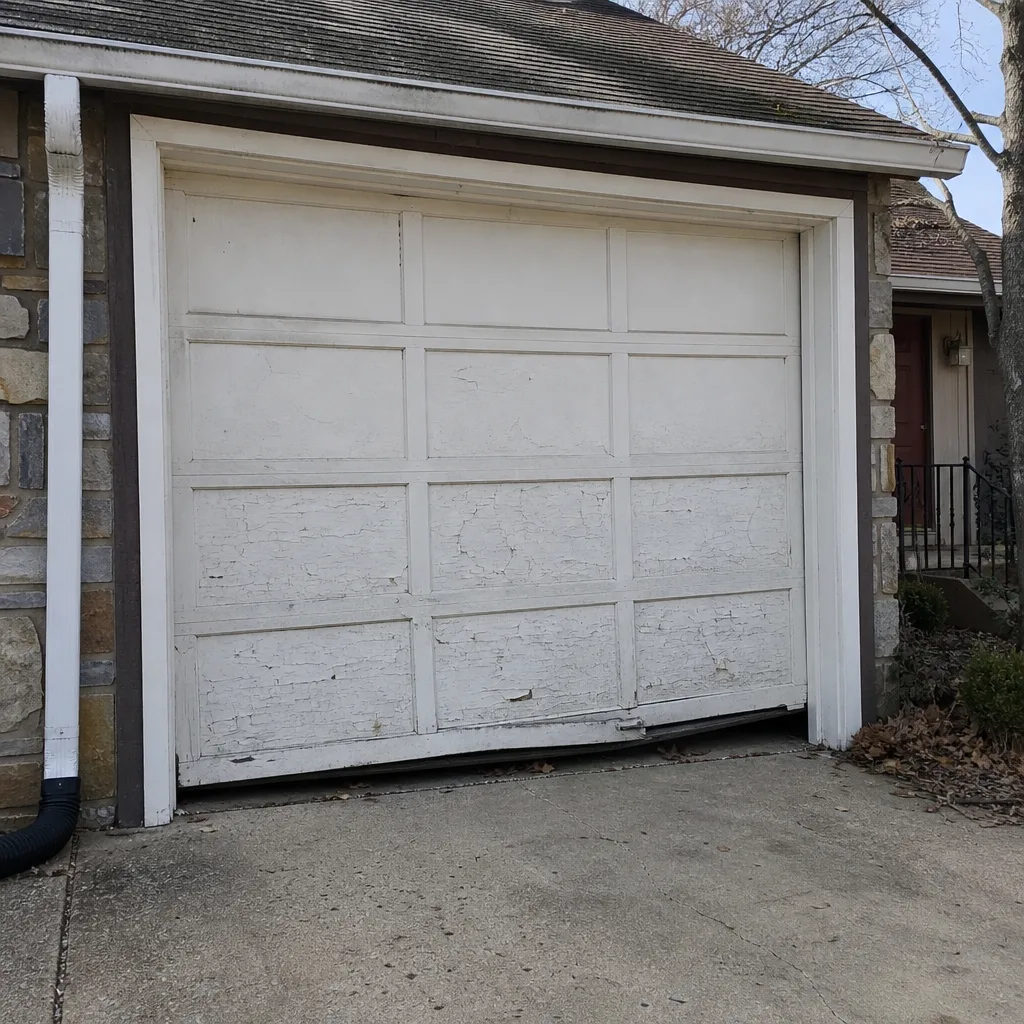 Before
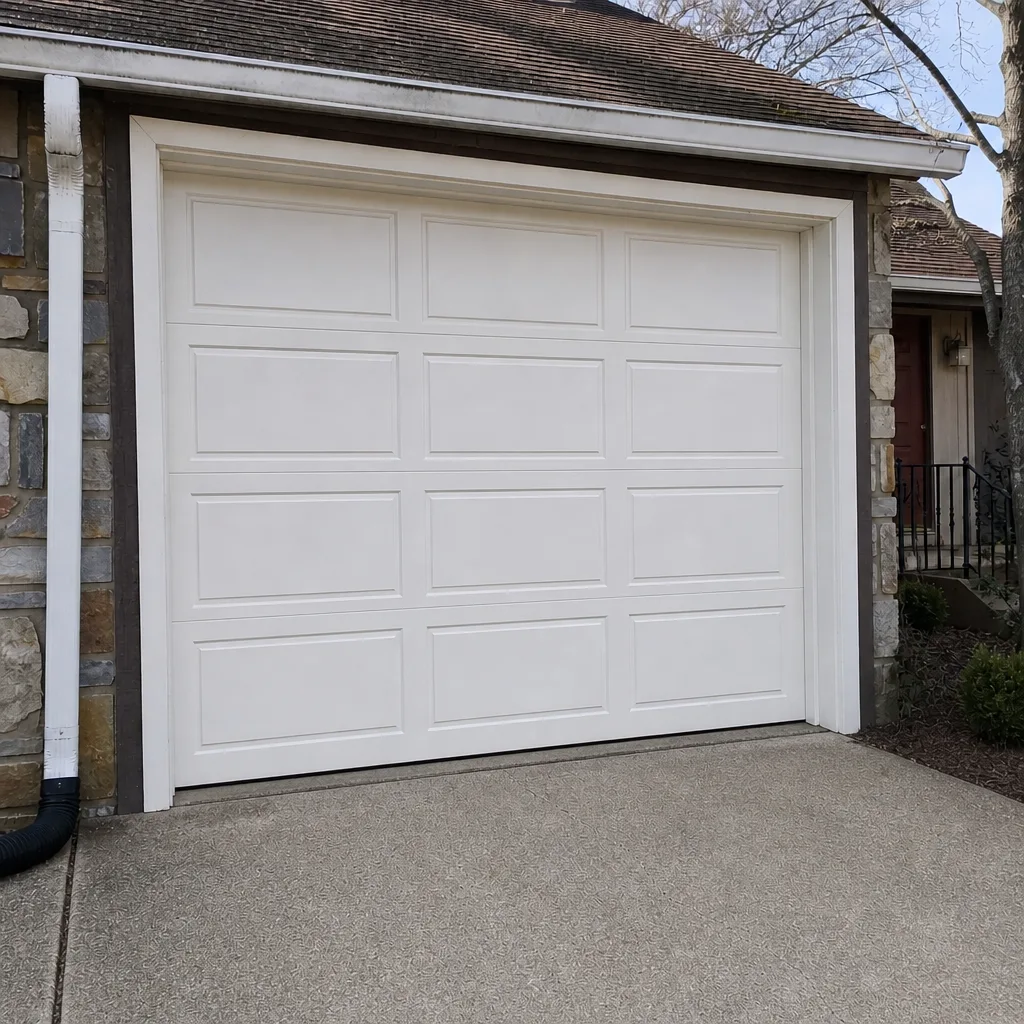 After
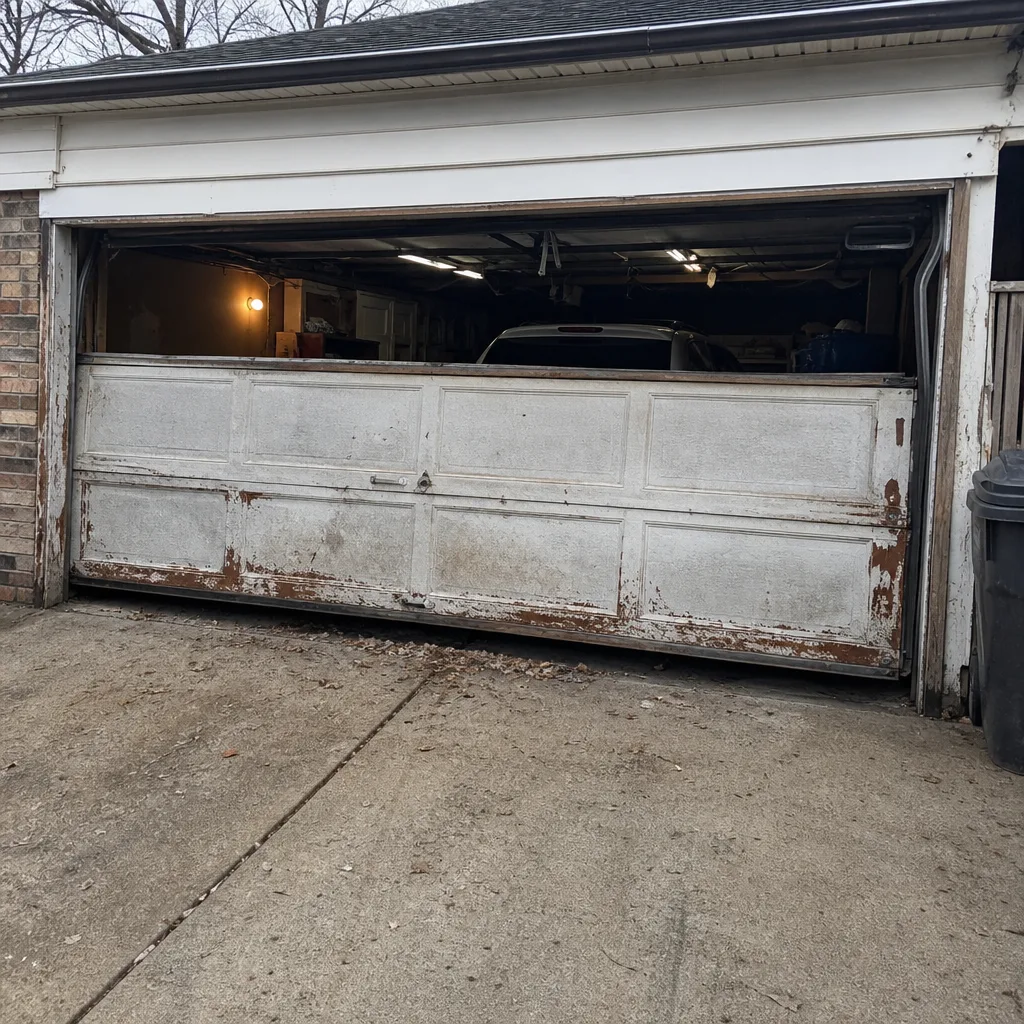 Before
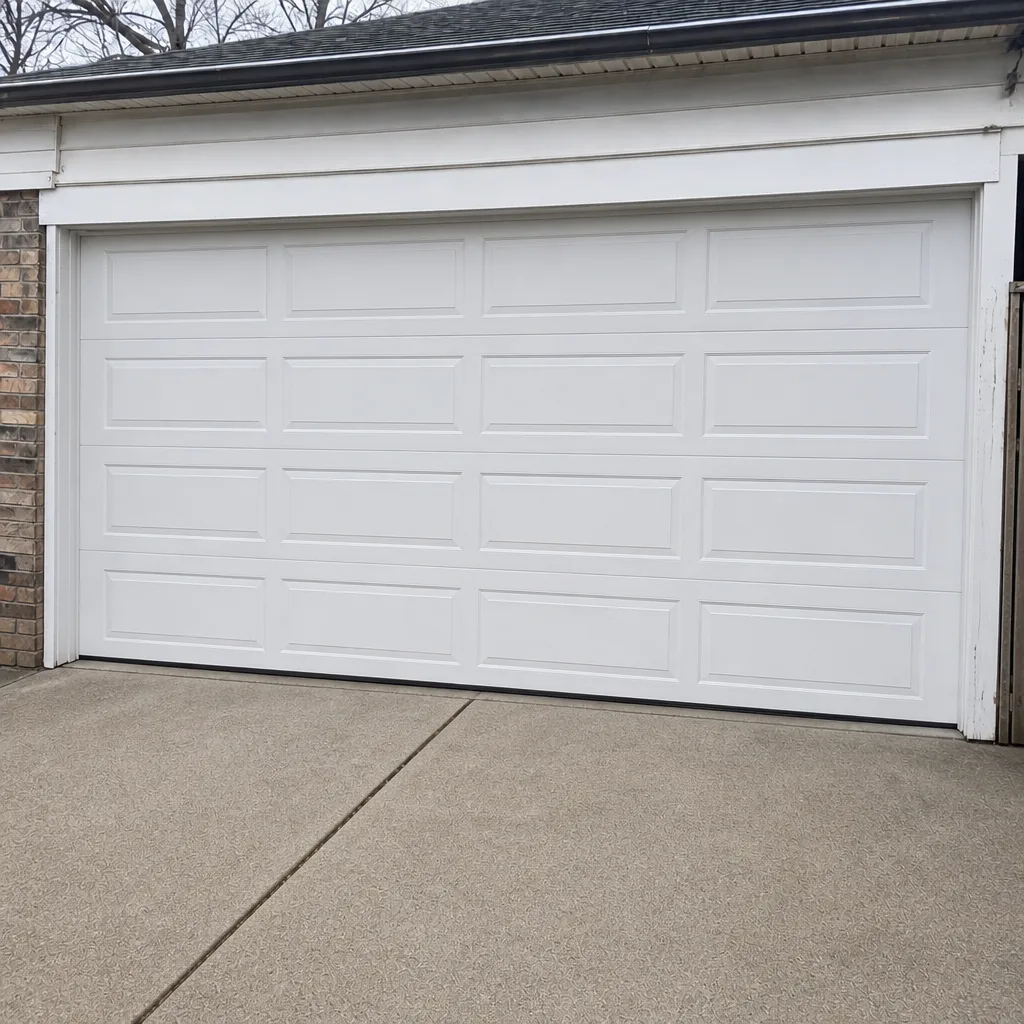 After
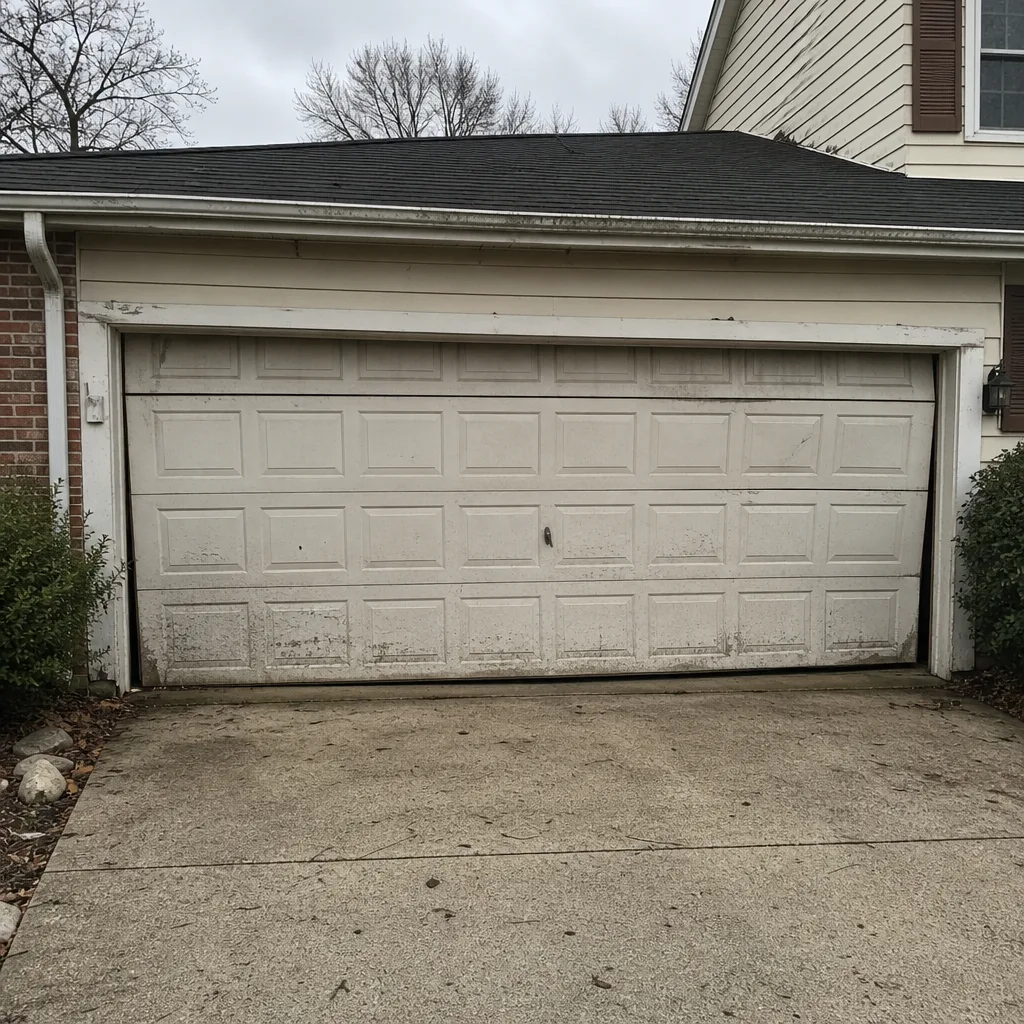 Before
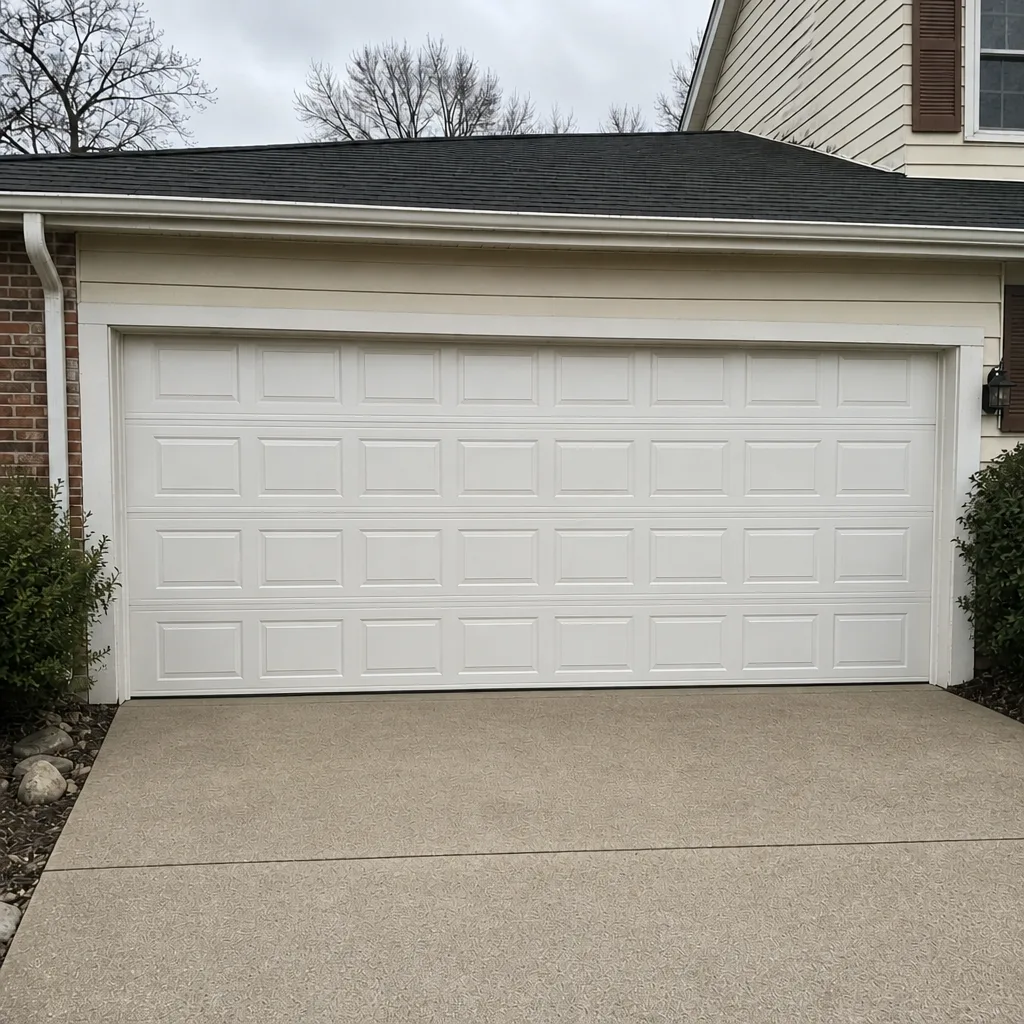 After
When to Call a Professional
Call a professional any time the diagnosis points to the spring system, the cables, the cable drums, or an off-track door. Those are the parts under stored energy and they’re outside the safe DIY line. Also call when the door is heavy when you test it by hand, when you hear a loud bang followed by a door that won’t lift, or when the opener stops responding entirely. Those are genuine safety or balance failures, not adjustment problems. Frederick Garage Door Repair Pros offers free estimates in Frederick. Call (855) 658-4191. We answer 24/7, with fast dispatch from 7am to 7pm, Sunday through Friday. Same-day service is available for most repair calls, and the price is quoted and agreed before any work starts. If the door is stuck open overnight or a broken spring is trapping a car inside, that’s the kind of call we answer first, not last. Saturday we’re closed, and a call that comes in then gets booked into the next opening.
Frequently Asked Questions
Single torsion spring replacement in Frederick typically runs about $180-$340 per spring, and because torsion springs are usually replaced in matched pairs, a pair costs roughly twice that single-spring range. The written estimate sets the final price, so you’ll know the number before any work starts. For an exact quote on your door, call (855) 658-4191 – estimates are free.
Yes, most repair calls in Frederick can be handled the same day, including spring failures and doors that won’t open or close. We answer 24/7, with fast dispatch from 7am to 7pm, Sunday through Friday. A call outside dispatch hours gets booked into the next opening. Call (855) 658-4191 to get on the schedule.
The price you agree to in the written estimate is the price you pay. We quote and agree the number before any work starts, so there’s no gap between the estimate and the invoice. If the door needs something we didn’t anticipate, we’ll walk through it and get approval first. Call (855) 658-4191 for a free estimate.
Yes, the local professionals we connect you with are licensed and insured as their state requires, and they specialize in garage doors rather than handling a dozen different trades. Our technicians have up to 11 years of experience with the major types of garage door and opener. Call (855) 658-4191 to talk through your door.
A door that opens but won’t close is almost always a safety-reverse system problem, which means a misaligned or dirty photo-eye, an obstruction in the path, or a wall switch that’s locked out. Clean both lenses and check that the indicator lights are steady before assuming a sensor has failed. If the door still won’t close, that’s an opener repair or sensor replacement, and you can call (855) 658-4191 for a free estimate.
No. Torsion and extension springs are under extreme tension, and adjusting or replacing them without the right tools and training can cause serious injury. The safe DIY items are photo-eye alignment, limit screws, and remote batteries. Anything involving the spring system, cables, or cable drums needs a trained technician. Call (855) 658-4191 for spring work handled safely.
The Bottom Line
Almost every garage door problem traces to one of five mechanical categories, and the fastest way to troubleshoot is to identify which category you’re in before touching anything. Balance and spring failures, travel and limit issues, safety-reverse faults, track and roller damage, and opener logic problems each behave differently and point to different next steps. Frederick’s freeze-thaw winters and humid summers make springs and tracks the most common failure points in this area, and those are the parts that sit past the DIY line. If the diagnosis points to springs, cables, or an off-track door, stop and call. If it points to a limit screw or a photo-eye, you can safely handle it. Frederick Garage Door Repair Pros offers free estimates in Frederick, and we work on virtually every major brand. Call (855) 658-4191 to get a written price before any work starts.
Written by the team at Frederick Garage Door Repair Pros.