
Last updated November 23, 2026
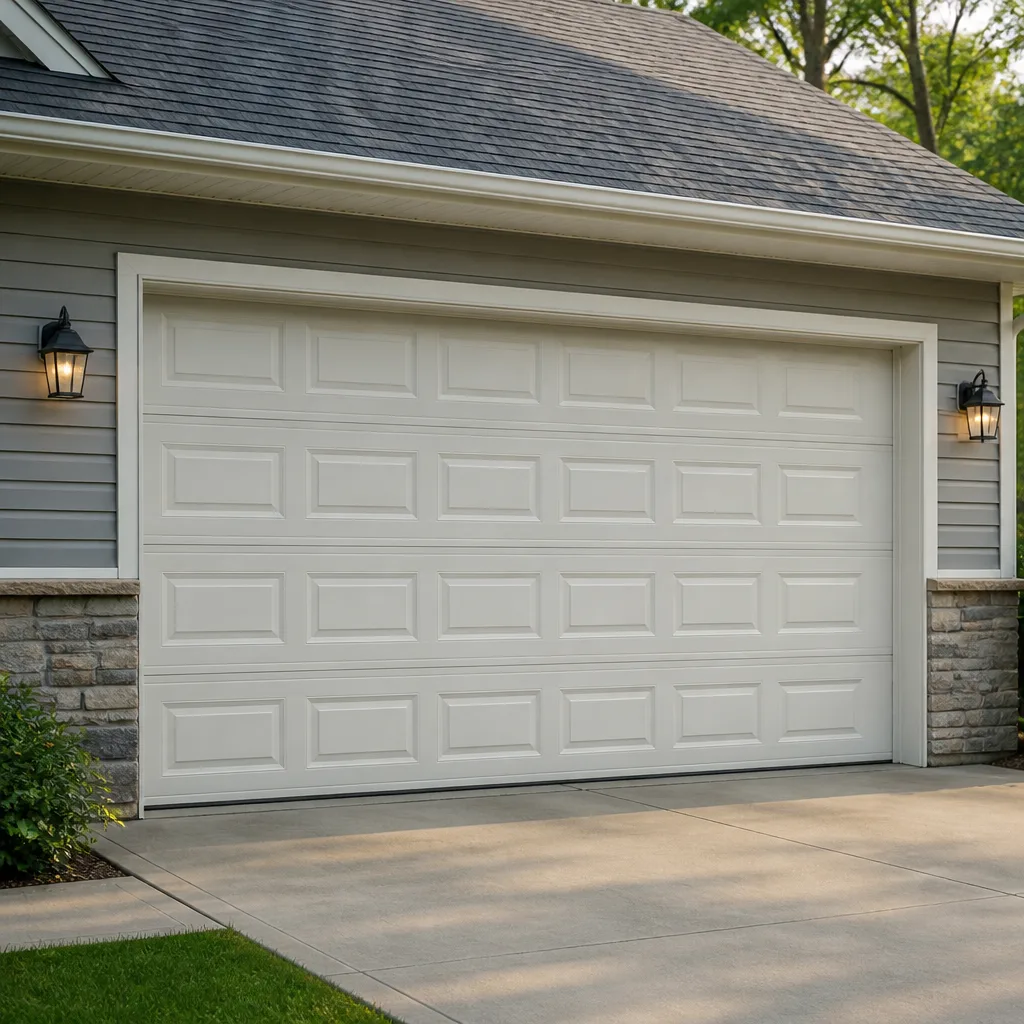 Raised-panel steel
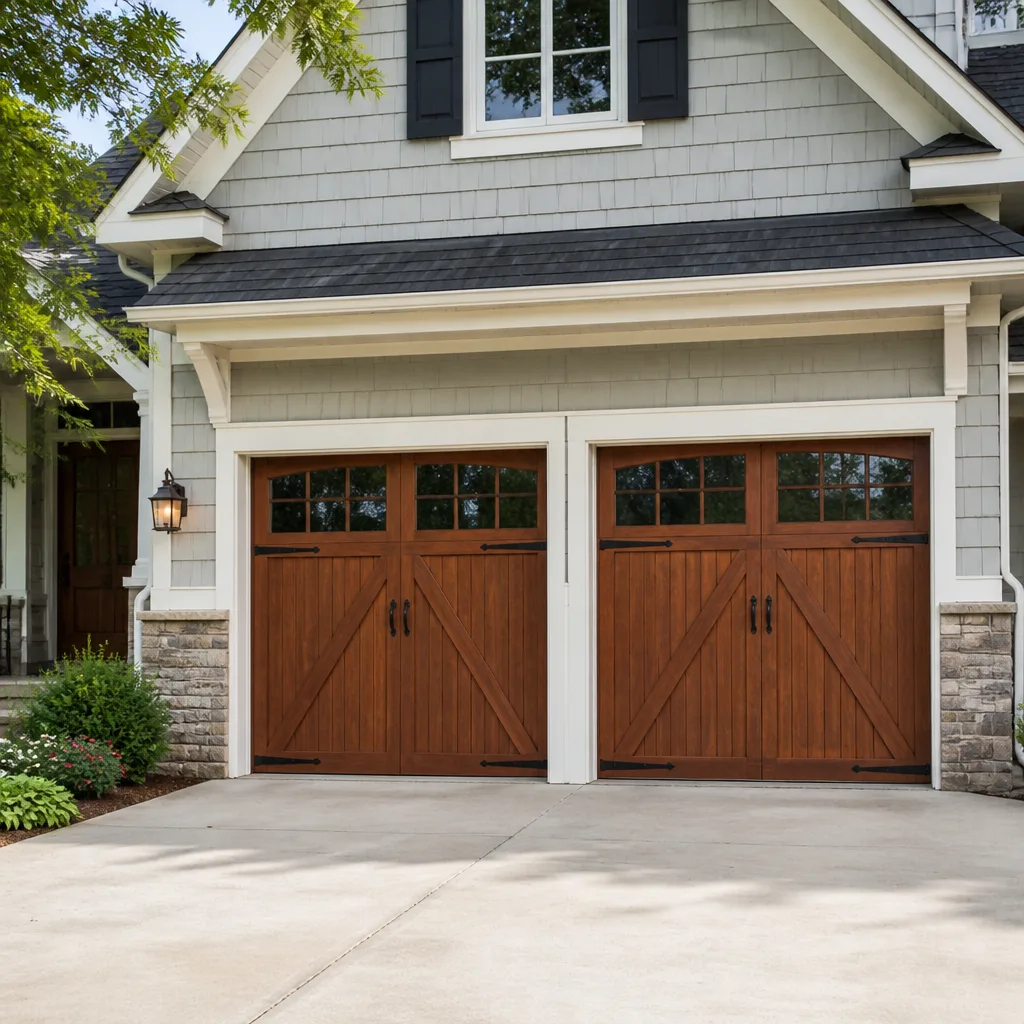 Carriage house
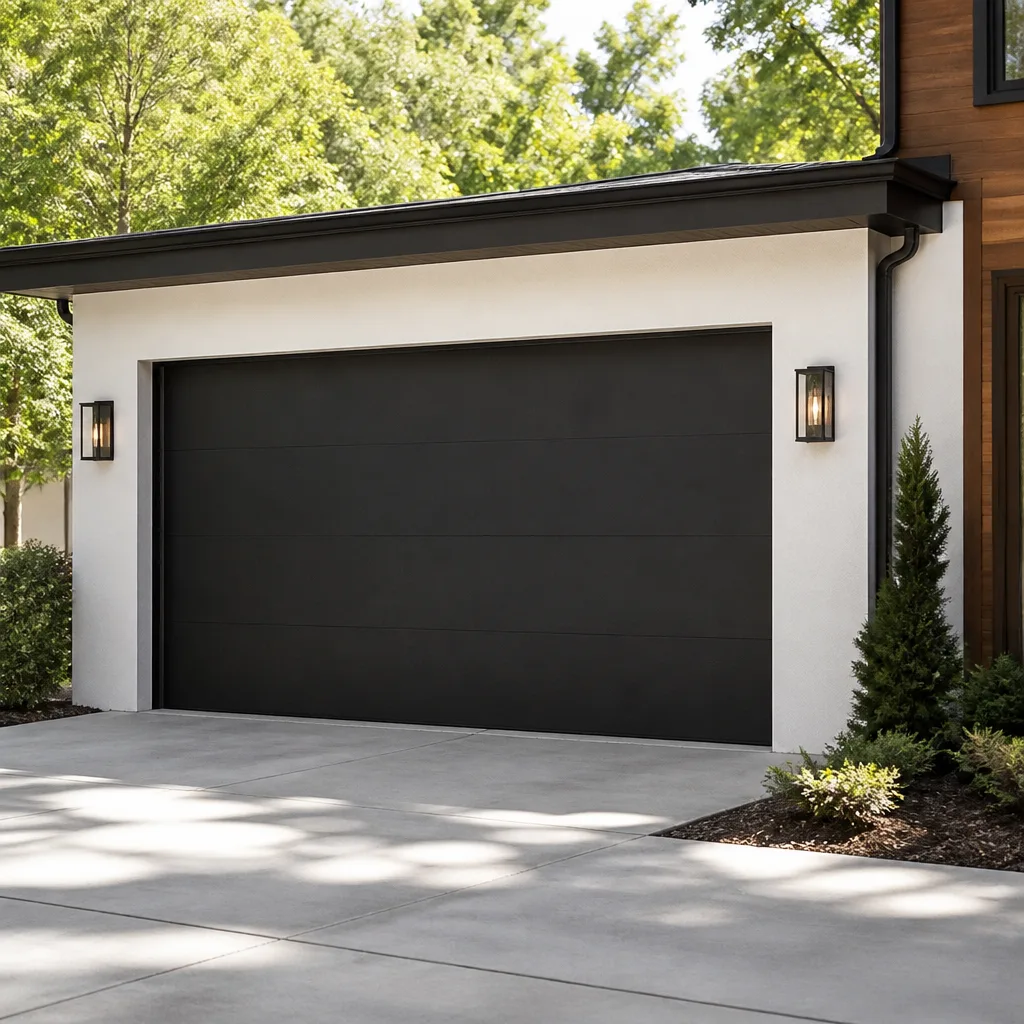 Modern flush
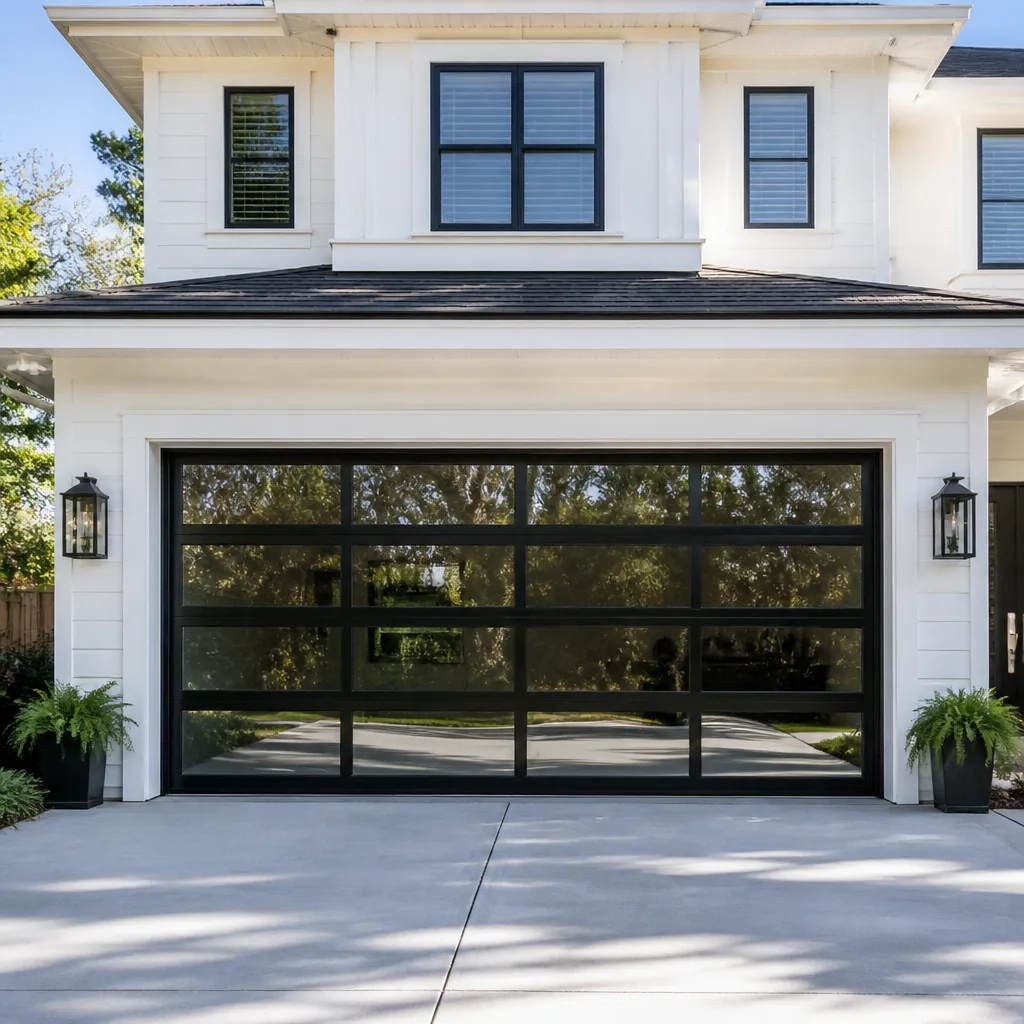 Full-view glass
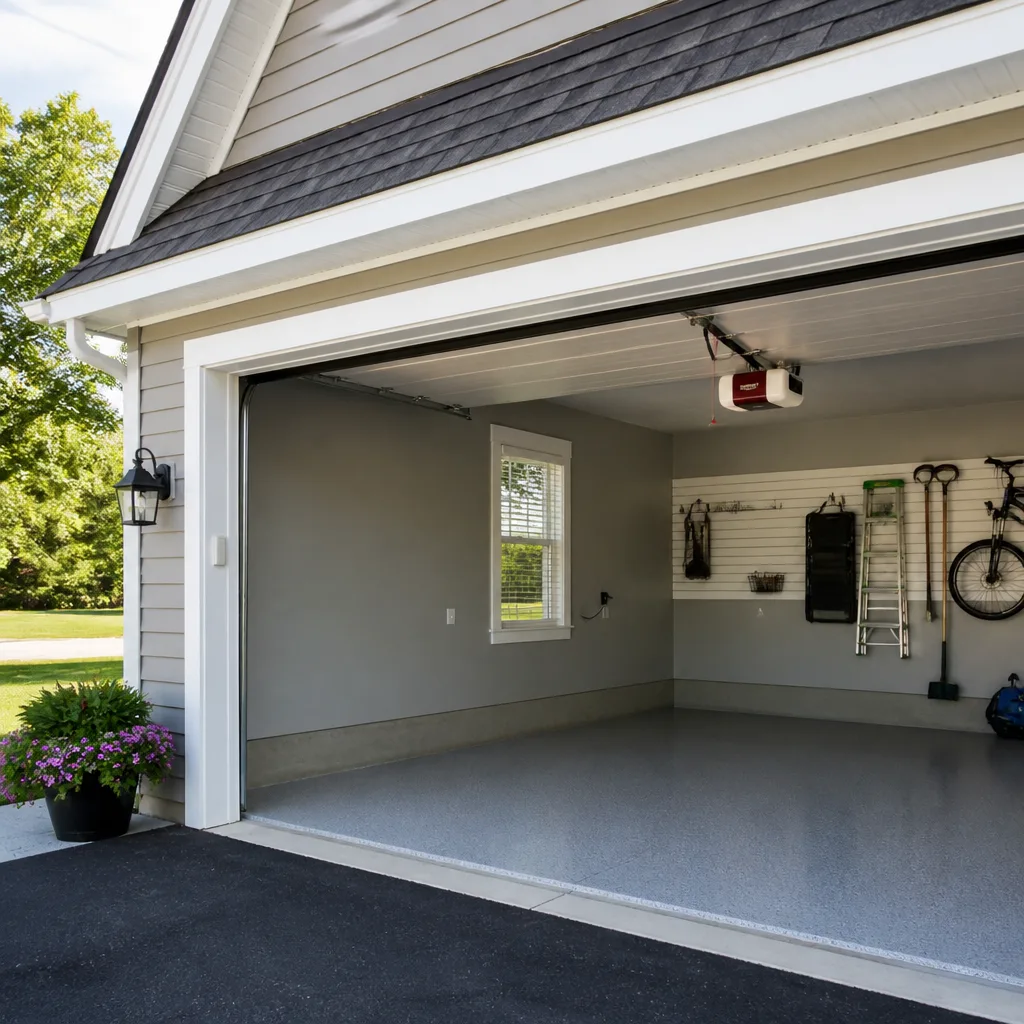 LiftMaster openers
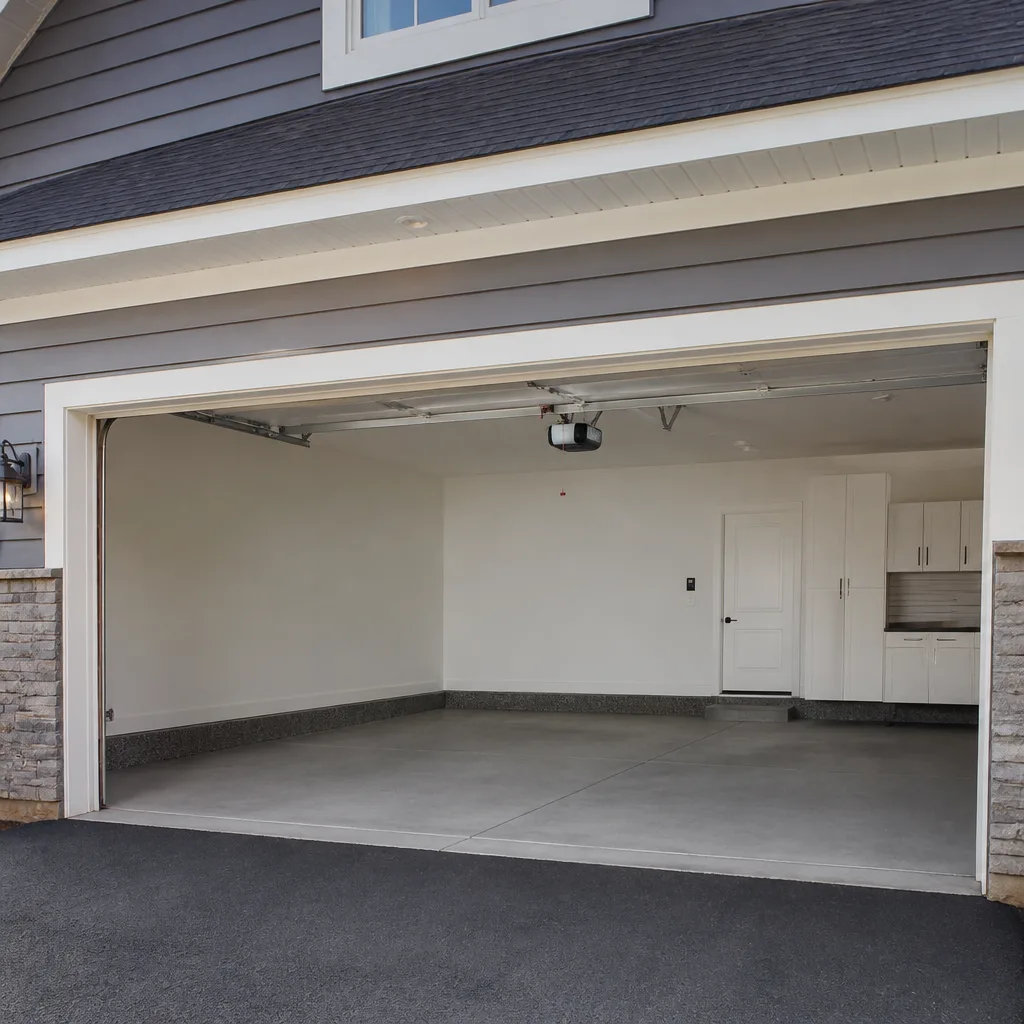 Chamberlain openers
Full 25-point door and opener safety check with every visit - springs, cables, rollers, tracks, and your LiftMaster or Chamberlain opener included
You get a price before we start. It does not change when the pro arrives.
Get your free estimateGarage Door Warning Signs: A Frederick Homeowner’s Reference Guide
A garage door that hesitates for half a second before it moves isn’t quirky. It’s telling you the springs are losing tension. Most homeowners miss that message because nobody ever taught them what a healthy door looks and sounds like. You can’t spot a deviation until you know the baseline.
That’s what this guide fixes. We’ll walk through the sounds, movements, and visual cues a Frederick homeowner can actually read, then sort them into three tiers: watch it, schedule a repair, or stop using the door right now. By the end, you’ll know whether your door is fine, overdue, or genuinely dangerous. Frederick weather, from humid summers to freezing winters, puts real stress on springs and cables, so a little literacy goes a long way.
Quick Answer
The most common garage door warning signs are unusual noises (scraping, grinding, or a loud pop), uneven or hesitant movement, a door that reverses without obstruction, and visible cable fraying or spring gaps. In Frederick, a door that hesitates or pops usually points to spring tension loss and should be inspected within days, not months; frayed cables or a door that won’t stay down are stop-using-it-now signals.
Styles & brands we work with
- Raised-panel steel
- Carriage house
- Modern flush
- Full-view glass
- LiftMaster openers
- Chamberlain openers
Table of Contents
- What a Healthy Garage Door Actually Looks and Sounds Like
- Reading the Sounds: Scraping, Grinding, and the Pop
- Reading the Movement: Hesitation, Drift, and Uneven Lifting
- Opener-Specific Warnings: Motor Runs but the Door Doesn’t Move
- What You Can See: Cables, Springs, and Rollers
- The Three Tiers: Watch It, Schedule It, Stop Using It
- Frederick Conditions That Accelerate Wear
- What You Can Do Without Touching the Dangerous Parts
What a Healthy Garage Door Actually Looks and Sounds Like
Before you can spot a problem, you need a mental picture of normal. A healthy garage door is boring. It lifts in one smooth motion, stays level across the bottom edge, and settles quietly against the floor. The opener hums at a steady pitch with no straining. You’ll hear the chain or belt moving, a soft roll of the rollers in the track, and a gentle thud at the end of travel.
Here’s the baseline checklist. Run through it once a month, ideally from inside the garage with the door closed, then again as it opens:
- Motion: The door rises in one continuous, even motion with no pause, jerk, or stutter.
- Level: The bottom edge sits parallel to the floor on both sides. Neither corner is higher.
- Sound: A steady hum, a soft roll, nothing sharp, nothing grinding, nothing that makes you wince.
- Balance: Disconnect the opener and lift the door halfway by hand. A balanced door should hold its position with minimal effort. If it slams down or feels very heavy, the springs are working wrong.
- Reversal: Put a small object in the door’s path. It should reverse on contact. Test the safety sensors by waving a hand across the beam.
Once you know what normal feels like, small changes jump out. A door that used to be silent and now clicks at the same spot every time is telling you something. In Frederick, we’ve learned that this step matters most in fall and spring, when temperature swings move the metal, tighten and loosen the hardware, and expose whatever was already wearing.
Reading the Sounds: Scraping, Grinding, and the Pop
Garage door sounds aren’t all the same warning. Each one points at a different part of the system, and knowing which is which saves you from guessing.
- Scraping (metal on metal, like nails on a chalkboard): This usually means a roller has lost its bearing or the door is rubbing the track. The roller freezes up, stops rolling, and starts dragging. Sometimes the track has shifted a fraction of an inch and the door edge is grabbing it. Either way, scraping wears the track fast. Don’t ignore it.
- Grinding (a low, gritty rumble): Often comes from the opener’s gears, a dry chain, or worn bearings in the torsion hardware. If the grinding starts the moment the opener engages and stops when it does, suspect the opener. If it runs the whole travel, look at the rollers and hinges.
- A single loud pop (a bang, a snap, a boom from the ceiling): This is the one to take seriously. In our experience, a pop usually means a torsion spring has broken. The door may still open partway with the opener, or not at all. Stop using the door. A broken spring means the opener is now lifting the entire door weight alone, which can burn out the motor or snap a cable.
- Rattling or clanking: Loose hinges, bolts backing out, or a sagging panel. Usually not dangerous, but worth tightening before the hinge tears the panel.
- Squeaking: Lack of lubrication on the hinges, rollers, or springs. Easy fix with the right lubricant, and a good early warning that other parts are dry too.
Pay attention to when a noise happens. A scraping that only shows up in the last two feet of travel points at a specific track section. A pop that follows a cold snap is a classic spring failure. Frederick winters drop into freezing temperatures that make steel more brittle, so a spring that was already near the end of its life often breaks on the first really cold morning.
If you hear a pop and the door won’t lift properly, that’s a broken spring. Our garage door spring repair team handles these regularly, and this is not a job for a homeowner with a ladder.
Reading the Movement: Hesitation, Drift, and Uneven Lifting
The way a door moves tells you as much as the way it sounds. Watch it open and close slowly, from a few feet back, and look for these patterns.
- Hesitation at the start: The door pauses for a beat before rising. This is the classic early sign of spring tension loss. The opener is doing more of the lifting than it should, and the springs are working less. Left alone, this leads to a spring failure or an opener burnout. Expect three to six weeks before something gives, sometimes less in cold weather.
- Uneven lifting (one side rises before the other): Usually a cable problem, a broken spring on one side, or a track that’s out of alignment. The door is twisting as it lifts, which stresses the panels and the hinges.
- Slow descent (the door drops faster than it should, or races down): Springs control the closing speed. If the door slams down, the springs may be weak or a cable may have slipped. If it closes too slowly or creeps, the springs are too tight or the opener’s force settings are off.
- Drift (the door slides down a few inches on its own after opening): A sign of spring or cable imbalance. Never leave a door that drifts unattended, especially with kids or pets in the garage.
- Reverse before it reaches the floor: The safety sensors or the opener’s force limit may be triggering. If the sensors are clean and aligned and the door still reverses, the opener is sensing resistance it shouldn’t. That’s a sign of a binding door or failing springs.
A balanced door, disconnected from the opener, should hold itself at any point in its travel. If it won’t, the springs aren’t matched to the door’s weight anymore. That’s a hardware problem, not an opener problem, and adjusting the opener’s force settings won’t fix it. It’ll just push a worn spring harder until it lets go.
Opener-Specific Warnings: Motor Runs but the Door Doesn’t Move
Your opener is a motor, a control board, a drive mechanism (chain, belt, or screw), and a set of safety sensors. Knowing which part is misbehaving changes what you do next.
- The motor runs and sounds normal, but the door doesn’t move: The carriage may be disconnected from the drive (a pulled emergency release), the drive gear may be stripped, or a broken spring is preventing the door from lifting. If the opener is running and the door isn’t budging, the motor is now doing the lifting work solo. Shut it off. That’s an opener repair issue or a spring failure, and continuing to run it makes both worse.
- The door reverses for no apparent reason: Safety sensors misaligned, dirty, or blocked by cobwebs. The opener thinks something is in the path. Clean the lenses and check that the amber and green lights are both solid.
- The opener strains or hums without moving the door: The motor is overloaded. Look at the springs and the door’s balance first, then the opener.
- The door opens fine but won’t close (or closes a few inches and reverses): Force limits set too low, a binding track, or a worn roller creating resistance the opener reads as an obstruction.
- Clicking from the opener, no movement: A failing logic board or capacitor. Common on older units.
We work on virtually every major brand, including LiftMaster, Chamberlain, Genie, Clopay, Amarr, Wayne Dalton, Craftsman, and Raynor, so diagnosing the opener versus the door is routine. If you’re not sure which side of the system the problem is on, a quick look from a specialist saves you from replacing a healthy opener. Our garage door opener repair team can usually tell you on the first visit.
What You Can See: Cables, Springs, and Rollers
You don’t need to touch anything to spot most mechanical problems. The best inspection happens with your eyes, from the floor, with a flashlight.
- Cables: Look at the steel cables on each side where they connect to the bottom bracket and run up to the drum. Fraying, kinks, or a cable with broken strands (visible as a fuzzy or bird-nested texture) is a stop-using-it signal. A frayed cable can snap without much warning. Never try to fix or adjust a cable yourself.
- Springs: A torsion spring lives above the door at the header. A healthy one is one continuous coil. If you see a visible gap in the coil, or the spring has separated into two pieces, it’s broken. A broken spring cannot be repaired; it must be replaced. A matched pair is usually replaced together. Extension springs run along the sides above the track and should have safety cables running through them; if those are missing, that’s a serious safety hazard.
- Rollers: Each roller sits in a hinge and rides in the track. A worn roller wobbles, has a flat spot, or looks dry and grey. Look for uneven wear across the rollers, a sign that the door isn’t riding evenly. A roller that’s lost its bearing wears the track every cycle.
- Hinges and panels: Rusted or cracked hinges, or a panel that’s cracked at the edges where the hinges attach, mean the door is flexing. Address that before the panel tears free.
- Track: Stand back and sight down the track. It should be straight. A dent or an out-of-alignment section makes the door drag, scrapes, and can throw a cable.
Springs and cables are under extreme tension. A torsion spring can store enough force to cause serious injury in a fraction of a second. If anything you see looks broken or out of place on those components, stop the door and call us. We handle springs as a core service, not an afterthought, and that’s because the job is genuinely dangerous to do any other way.
The Three Tiers: Watch It, Schedule It, Stop Using It
This is the part that solves the “should I call right now or wait” question. Use this tier system to decide what happens next.
Tier 1: Watch It
Squeaking, occasional rattling, minor roller noise, or a slight delay that comes and goes with temperature. These are signs of wear that don’t need immediate action, but they should go on a one-month watch list. Lubricate the moving parts, tighten what you can reach, and note if the symptom gets worse. If it does, move up a tier.
Tier 2: Schedule a Repair
A consistent hesitation before lifting, uneven lifting, scraping or grinding during travel, a door that reverses without obstruction, a slow descent, or a spring that’s starting to show signs of wear. These are the “call this week” signs. The door still works, but it’s working wrong and something is going to fail. Call us, get a written quote, and schedule the repair. Garages are how people get to work, school, and the store; if you have two vehicles and one is trapped, that changes the urgency.
Tier 3: Stop Using the Door Now
A loud pop followed by the door not lifting or barely lifting, a frayed or snapped cable, a visible gap in the torsion spring, a door hanging crooked, or a door that won’t close or won’t stay down. These are the “call today” and “leave it alone until a specialist gets there” signs. Don’t run the opener to “test it.” Don’t try to lift it by hand. Don’t stand under it. Call (855) 658-4191. We answer 24/7. Fast dispatch from 7am to 7pm, Sunday through Friday.
One important note: a door that fails at night isn’t a “wait until opening” problem. It’s a door that’s open and accessible. Call, we’ll book you into the next opening in the 7am-7pm dispatch window, and you don’t have to go looking for another number. If it’s a genuinely dangerous failure, we treat it the same way we treat a scheduled appointment, just fast.
Frederick Conditions That Accelerate Wear
Garage doors in Frederick live through a specific set of stresses. The region’s summer humidity swells wood panels and works on hinges. Winter temperatures that drop into the teens and below make steel more likely to snap at a worn point, which is exactly where springs break. Spring thaw and fall rain move moisture into the garage and set up rust on rollers and cables. Add road salt tracked in on the floor, and the steel near the door’s bottom bracket sees more corrosion than it would in a drier climate.
That means the “watch it” and “schedule it” windows are shorter here than some generic guides suggest. A spring that’s been losing tension since summer often makes it through fall and lets go in January. A cable with a few broken strands usually fails inside a season. If your door has been acting slightly off since the weather turned, don’t wait for spring to look at it.
Frederick’s mix of older homes with wood-panel doors and newer builds with steel doors means we see both patterns: older doors with hidden rot at the bottom section, and newer doors with fast spring wear from the cyclic temperature swing. A specialist who’s seen a lot of both on the same streets can usually read the door’s age from its symptoms before they even look at the label.
We focus exclusively on garage doors, which means we see Frederick’s spring and opener patterns all year and know what’s a real problem versus a seasonal quirk. If you want the trade specific view, that’s the number to call. Frederick Garage Door Repair Pros is the team to contact when a door starts acting up, and we’re worth a call before you assume it’s normal.
What You Can Do Without Touching the Dangerous Parts
There’s a safe set of checks and habits that help your door last, and there’s a list of things you should never touch. Knowing the difference keeps you out of the hospital and keeps the door working.
- Lubricate once a season. Use a garage-door-specific lubricant (not WD-40) on the rollers, hinges, and spring coils, staying away from the cables. Wipe off the excess. This quiets squeaks and extends roller life.
- Test the safety reverse monthly. Put a block of wood or a roll of paper towels in the door’s path. The door should reverse on contact. If it doesn’t, that’s a safety failure that needs a repair.
- Check the sensor lights. Both sensors should glow steady, one amber, one green. If one flickers, it’s misaligned or dirty. Clean the lens with a soft cloth.
- Look before you drive. A quick visual scan for a gap in a spring, a cable that looks weird, or a door hanging crooked takes five seconds and catches the failures early.
- Listen for the pop. The single most important sound to recognize. If you hear it, stop using the door.
- Keep the track clear. Don’t lean tools, bikes, or boxes against the track. A dent from a lawnmower handle can turn into a binding door.
- Balance test once a month. Disconnect the opener, lift the door halfway by hand, and see if it holds. If it slams down or feels much heavier than it used to, the springs need attention.
What you should never do: adjust a torsion spring with a screwdriver or an adjustable wrench, cut or re-route a cable, remove a bottom bracket while the door is on the ground, or climb a ladder to “just take a look” at the torsion bar while the door is connected to the opener. Springs and cables carry stored energy that can cause serious injury. If you’re not sure whether something looks right, call us and describe it. Our technicians have up to 11 years of experience, and they’ve seen the sight you’re describing on a Frederick door before.
Common Mistakes to Avoid
- Ignoring the hesitation because “it’s always done that.” Doors don’t get quirky; they get worn. That half-second pause before the door lifts is a spring tension problem, and putting it off just moves the failure to a less convenient time.
- Mistaking an opener problem for a door problem, or the reverse. Replacing an opener because the door is heavy means the new opener burns out on the same heavy door. Diagnose the door’s balance first.
- Running the opener after a pop. The springs are gone, so the opener is lifting the whole door. It’s one of the quickest ways to ruin a motor or snap a cable that was already stressed.
- Trying to fix springs or cables on your own. We handle these as a core service for a reason. Springs are under extreme tension, and a DIY adjustment is a classic way to end up in the emergency room. In Frederick, we hear about these attempts more than we’d like.
- Using WD-40 on the tracks and hinges. It’s a light oil, not a lubricant. It attracts dust and dries out the parts. Use a garage-door-specific lubricant instead.
- Denting the track with a bike or a trash can. A small dent in the track makes the door drag, which wears rollers and stresses the opener. Keep the track zone clear.
- Assuming a door that still works is fine. A door with a broken spring can sometimes still be lifted by the opener, which means it looks “fine” until the opener burns out or a cable snaps. Fixing the spring first is the right order.
See the difference
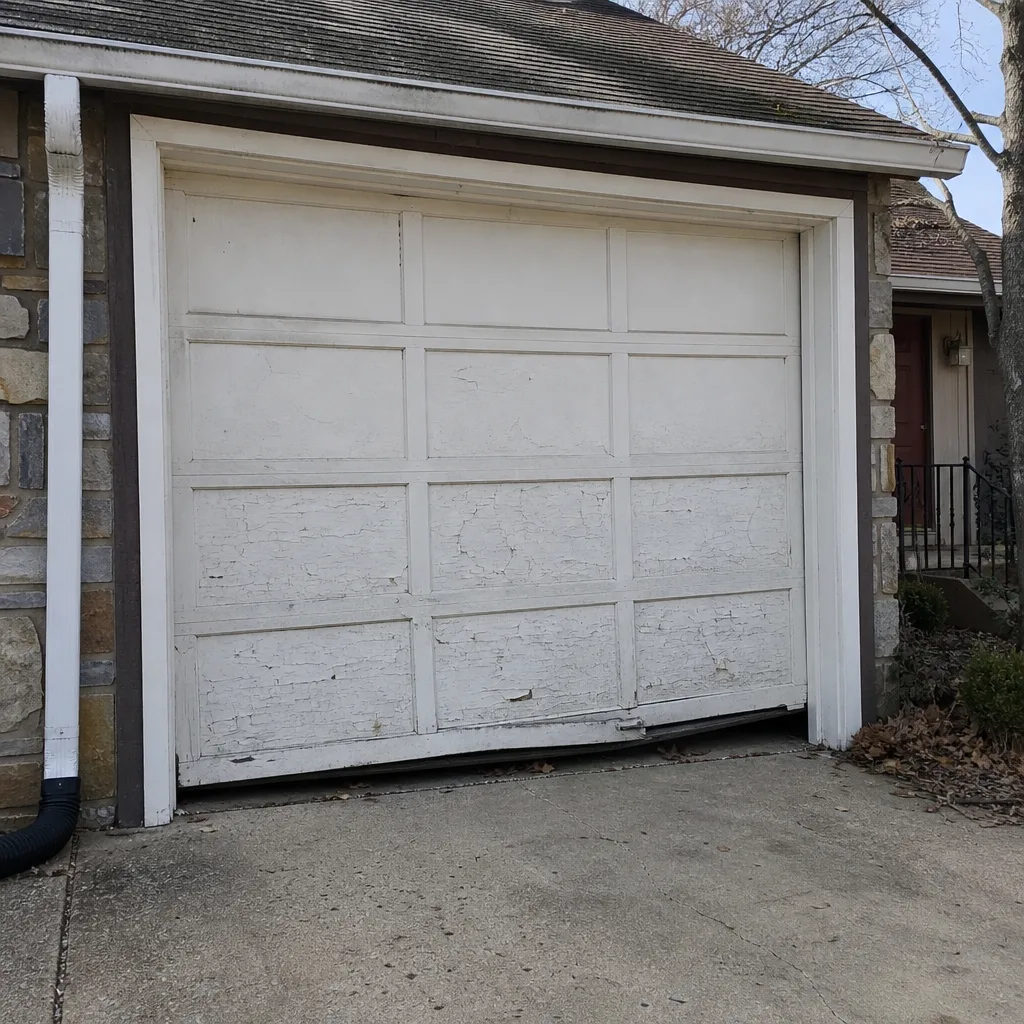 Before
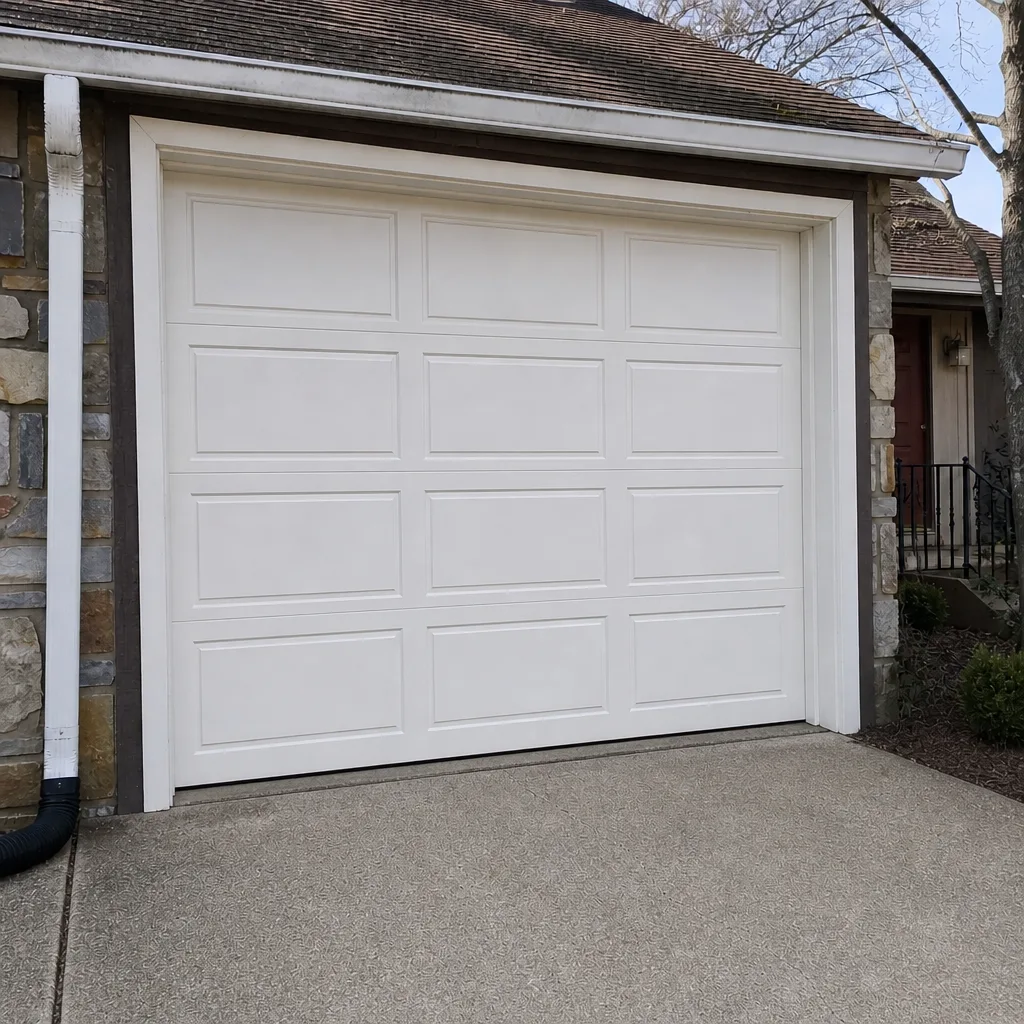 After
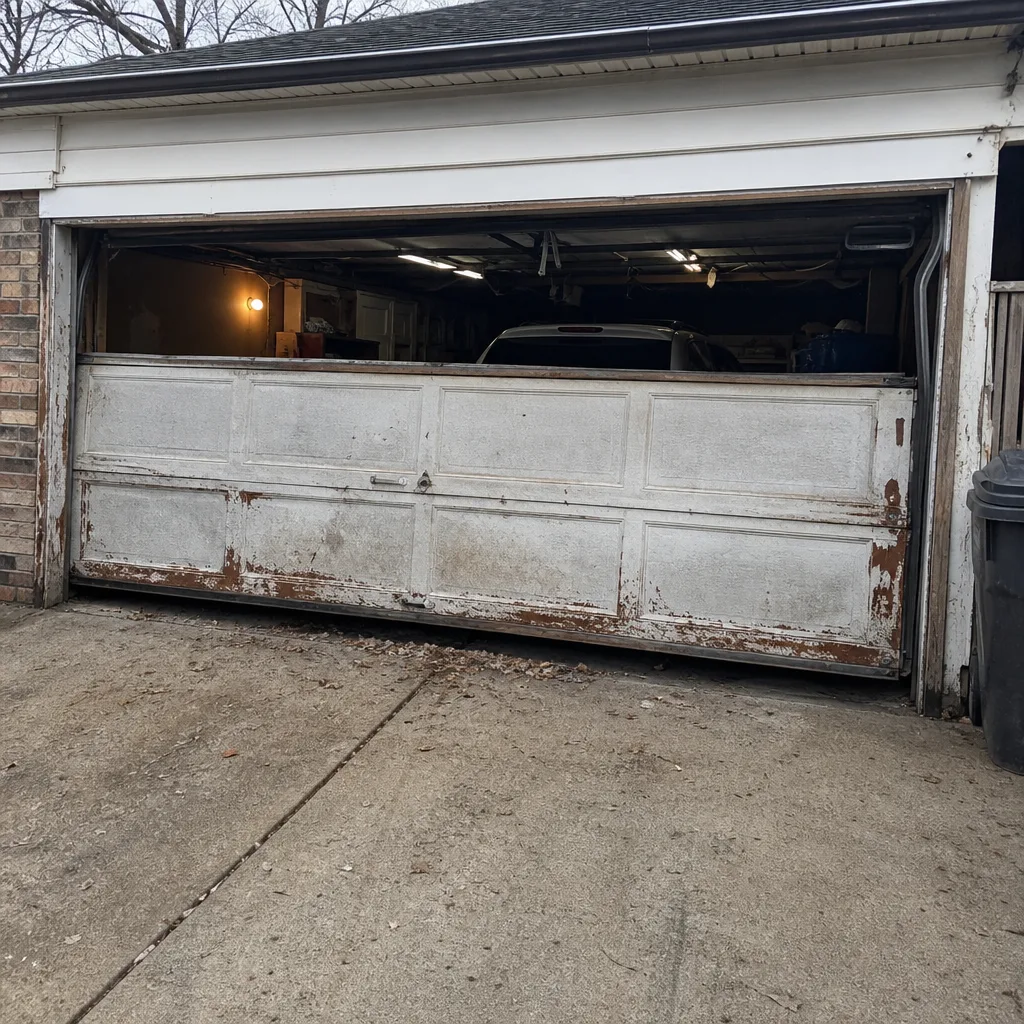 Before
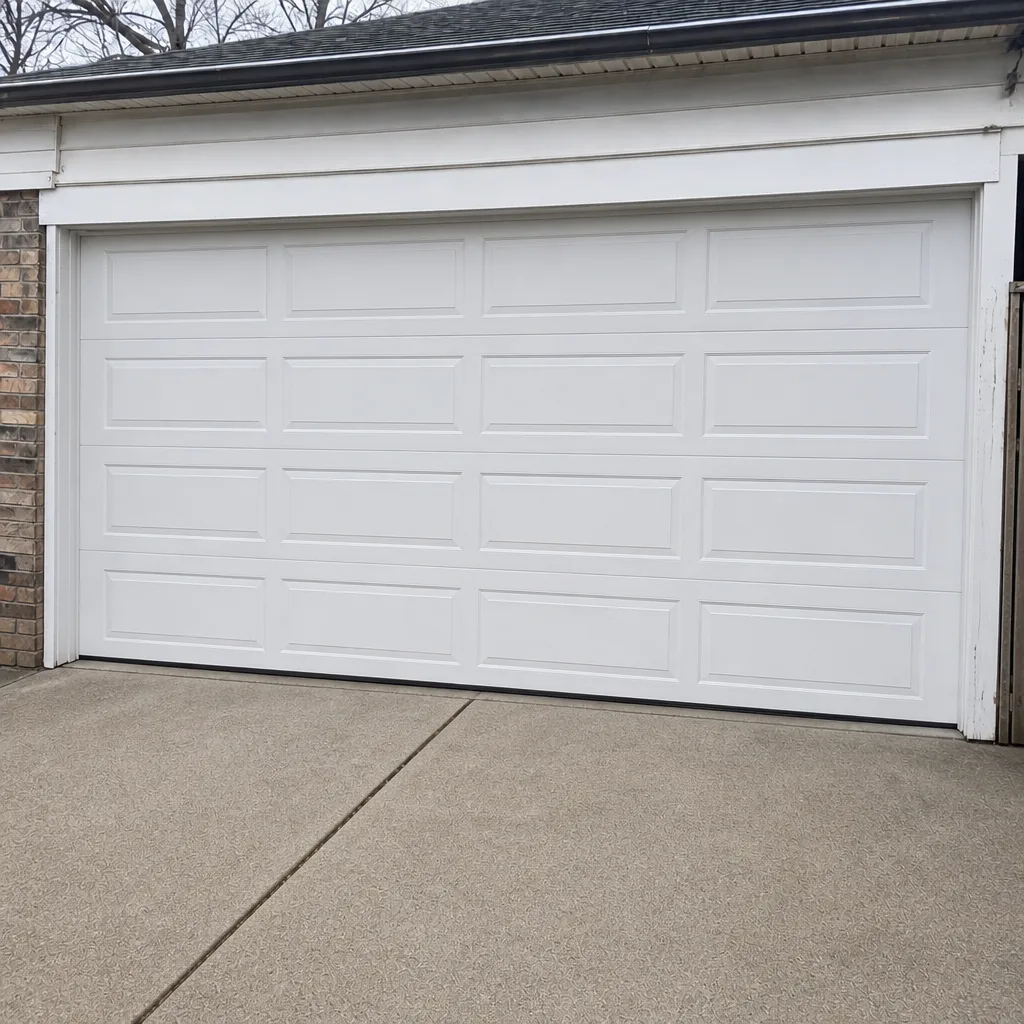 After
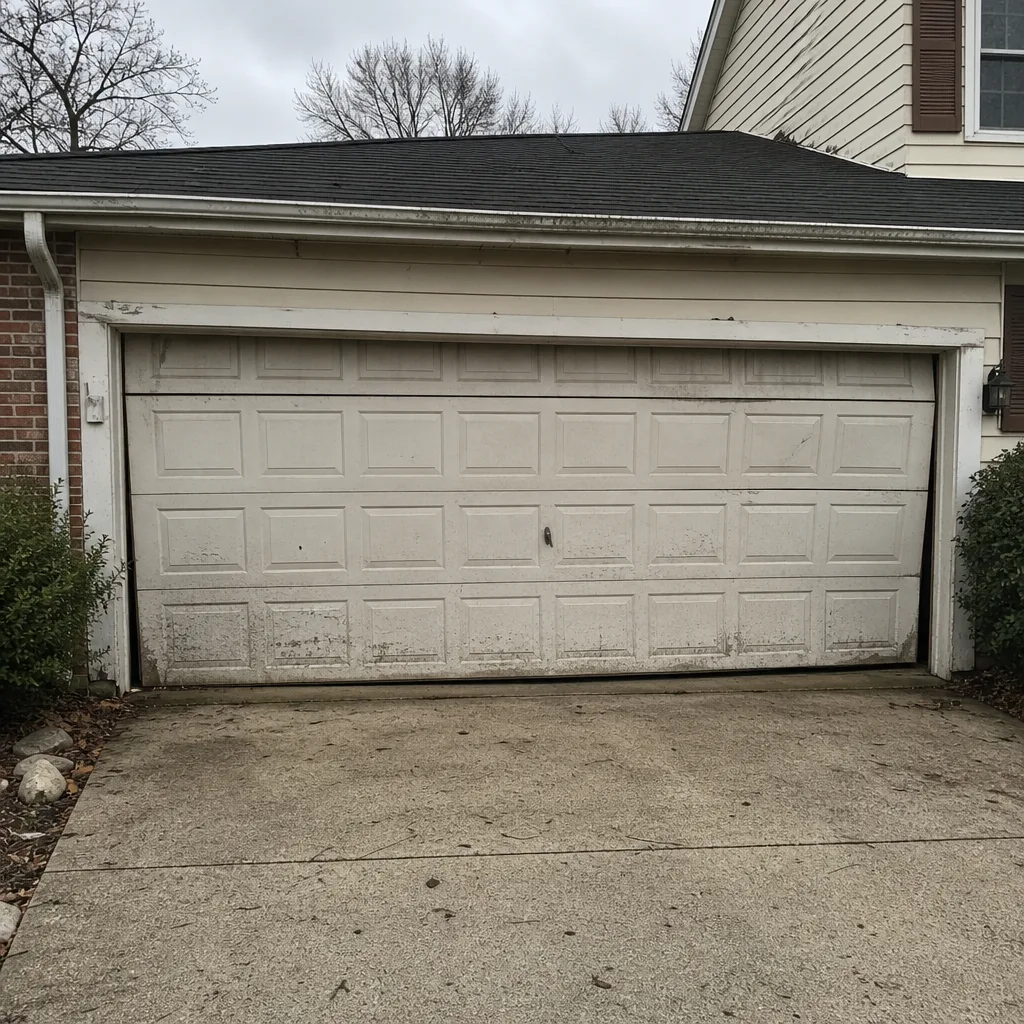 Before
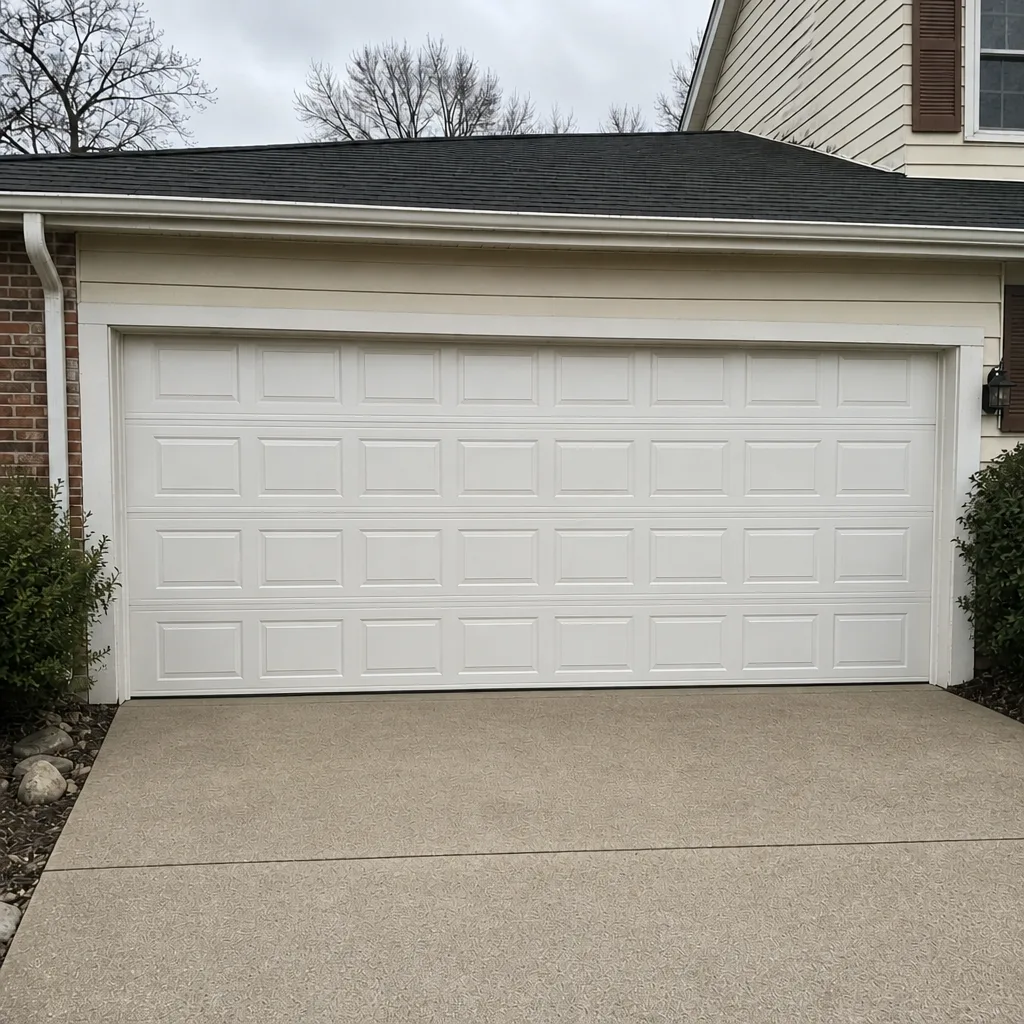 After
When to Call a Professional
Call a professional when you hear a pop, see a visible gap in a spring, notice a frayed or snapped cable, the door hangs crooked, the door won’t stay down, the motor runs without the door moving, or the door hesitates every time. Those are the yellow-and-red tier signs, and they don’t get better on their own. It’s also worth calling if you’re simply unsure. A quick description of the sound and the symptom often lets a specialist tell you whether it’s a “watch it” or a “stop now,” and that saves you from a call you didn’t need to make at the wrong moment. Frederick Garage Door Repair Pros offers free estimates in Frederick. Call (855) 658-4191. We answer 24/7. Fast dispatch from 7am to 7pm, Sunday through Friday. Clopay, Amarr, Wayne Dalton, Craftsman, and Raynor doors are all in our regular rotation, so brand isn’t the reason to hesitate. Garage door repair is what we do, all day.
Frequently Asked Questions
Depends on the source. Grinding from the opener gears, a dry chain, or a worn roller bearing is annoying but usually not an immediate danger, so you can schedule a repair. Grinding that’s accompanied by the door dragging or hesitating is a sign of a binding door, and that’s a “stop and call” situation. If you’re not sure which, describe the sound to us and we’ll tell you.
Usually three to six weeks, sometimes less. A hesitation is the springs losing tension, and that process accelerates with use and with cold. In Frederick, a hesitation that starts in autumn often becomes a failure in the first real cold snap. Don’t book a repair for “sometime in the spring.” Book it while the door still works, because a scheduled repair is always cheaper and easier than an emergency one.
Most likely a broken spring preventing the door from lifting, a stripped drive gear, or a disconnected carriage. If the door won’t budge and you can hear the motor, stop running the opener. The motor is doing work the springs should be doing, and that damages the opener in a way that’s far more expensive than a spring repair. Call and we’ll sort it out.
No. Springs are under extreme tension, and even one slip can cause a serious injury. This is one of the few home repairs where a professional is genuinely mandatory, not just advisable. We handle spring repair as a core service because it’s the most dangerous and technically demanding part of the trade.
Yes, but usually a fixable one. The safety sensors are most often misaligned, dirty, or blocked by a cobweb. Clean the lenses and check that the sensor lights are both steady. If the door still reverses with nothing in the way, there’s resistance the opener is reading as an obstruction, which means a binding door or a worn roller. That’s worth a look.
They see more cycles than average and more temperature swing. Frederick’s winter cold makes steel more brittle at the point of wear, and its humid summers work on the hardware. A spring that would fail slowly in a mild climate tends to fail suddenly here. It’s another reason to watch for the early signs and get the door looked at before a cold morning catches you off guard.
The Bottom Line
Most garage door failures announce themselves. A hesitation, a new sound, a door that drifts or reverses, a gap in a spring, a frayed cable. None of these are random. Each one maps to a specific component and a specific level of urgency. The “watch it, schedule it, stop using it” ladder is the whole system in three sentences: mild wear gets watched, consistent symptoms get scheduled, and the pop, the snapped cable, or the crooked door gets a call right now with the door left alone. In Frederick, the season you’re in shortens those windows, so treat the symptoms as they appear. If you’re unsure which tier you’re in, describe the sound and the movement to us. One quick call tells you whether it’s a Monday repair or a tonight call. Frederick Garage Door Repair Pros is here to answer. Call (855) 658-4191. We answer 24/7. Fast dispatch from 7am to 7pm, Sunday through Friday, and the estimate is free.
Written by the team at Frederick Garage Door Repair Pros.